

No, Steve, you can’t just market it later. Why you need to build marketing and product at the same time.
Marketing doesn't start when you've built the product. It starts the moment you start thinking, "I reckon I can solve this problem... and maybe - just maybe - I can commercialise it".
Cue evil laugh.
"The product needs to be just right before I even look at marketing."
"Why do you need to advise me on the wording of the product onboarding campaign?"
"I know I need the validation part... but can't you just create me a Facebook page?"
These are just a few things that have been said to me in my marketing career.
Before, I'd get frustrated and feel defeated. I thought the founder or the boss knew better than me. Then, as I’ve grown older and greyer, I’ve realised that in fact these are just examples of people who don’t get marketing.
They don’t get quite understand startup marketing basics.
They see marketing as a cost, not a revenue-generator. They see it living in its own silo; not working with product and sales.
Maybe they've not realised that if you're going for investment or a grant, to be able to fill in the customer acquisition pages... you need to have started your marketing, well, yesterday.
So, why haven't some businesses twigged that marketing needs to start at the same time you build a product or service?

When does marketing start when growing your business?
Marketing doesn't start when you've built the product. It starts the moment you start thinking, "I reckon I can solve this problem... and maybe - just maybe - I can commercialise it".
In its early stages, marketing will masquerade as audience interviews, saying your pitch aloud to your partner, and tinkering with an automated form on your website.
It’s luring in the background when you’ve been “wronged” by someone on Fiverr for creating the world’s ugliest logo.
It’s there when you’re trying to work out if you can launch freemium model to make your app sound “cool”.
As you progress, as you get paying customers, the "marketing" evolves into more of a focus on scalable channels, keeping your customers engaged... oh, and maybe - just maybe - buying branded pens for that big event.
Here's how marketing evolved at an edtech startup I was working with. It’s adapted from a previous article I wrote on the early-stage startup marketing you need that digs into the specifics.
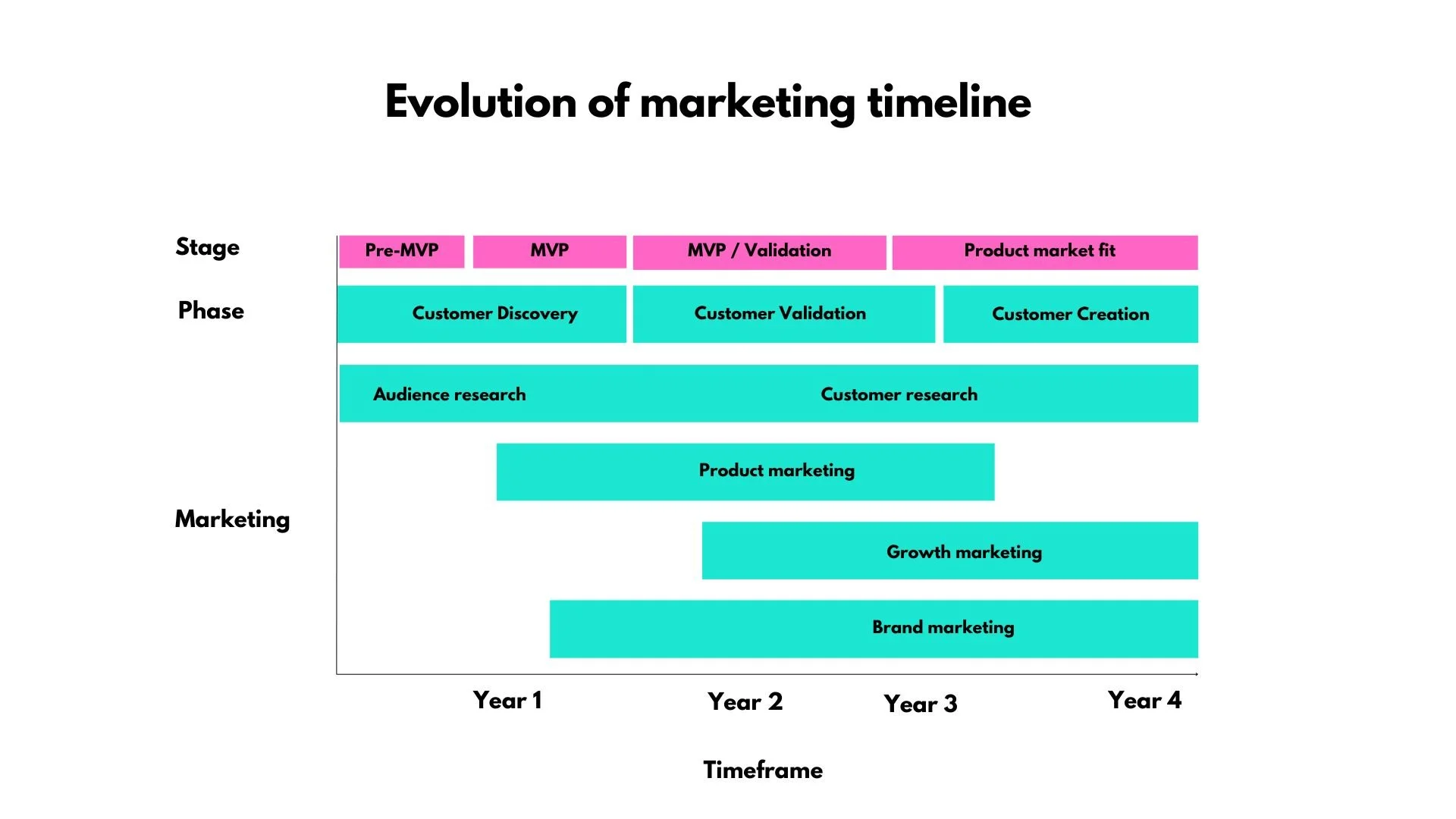
Things I want to highlight and really draw your attention to:
Research happens at every stage, from audience research to customer research (and then back to audience research when you pivot or search for where the true demand is)
Product marketing - driving users to specific features in order to see the value in your offering - comes in earlier in the process, because of the initial focus on retention as a core metric. We’ll look at what your primary metric needs to be by stage below
Brand marketing is an early player too, especially if you're the new kid on the block
And lastly, customer research will ultimately shape the type of messaging, communications and sales pitches. This is all good fodder for your website messaging strategy, and creating a structure that reflects how a customer buys
These startup marketing basics need to come into play because you're not "just" marketing a product. You're developing a solution people want, you're developing a commercial model, and you're establishing market presence.
And that takes time, my friend.
Still think marketing is just creating a LinkedIn banner? (hahahah)
The point I'm really trying to get across here is that marketing takes a lot of time. It's not something you can just pay someone to turn the magical lead tap on.
Oh, and investors are increasingly switching off to those businesses that haven't done the work on this stuff. And by that, I mean, prioritised the marketing and distribution.
Take Marc Andreessen.
He states the number one reason why his investment firm doesn't invest in certain founders is because there's no marketing plan in place.
No marketing strategy means it's likely the business won't hit the profitability targets they’ve made up in the previous slide deck pages.
The shortcut for you when it comes to building your startup's marketing strategy:
Once you understand the stage your business is at... you unlock a certain type of marketing strategy. A set of prescribed strategies that are aligned with your focus.
Brian Balfour very helpfully created this framework below to help show business owners what to focus on when it comes to growth.
It’s intended to show businesses how they can move from the traction to growth phases. But I use it to show organisation’s what growth metric to focus on and build marketing around.
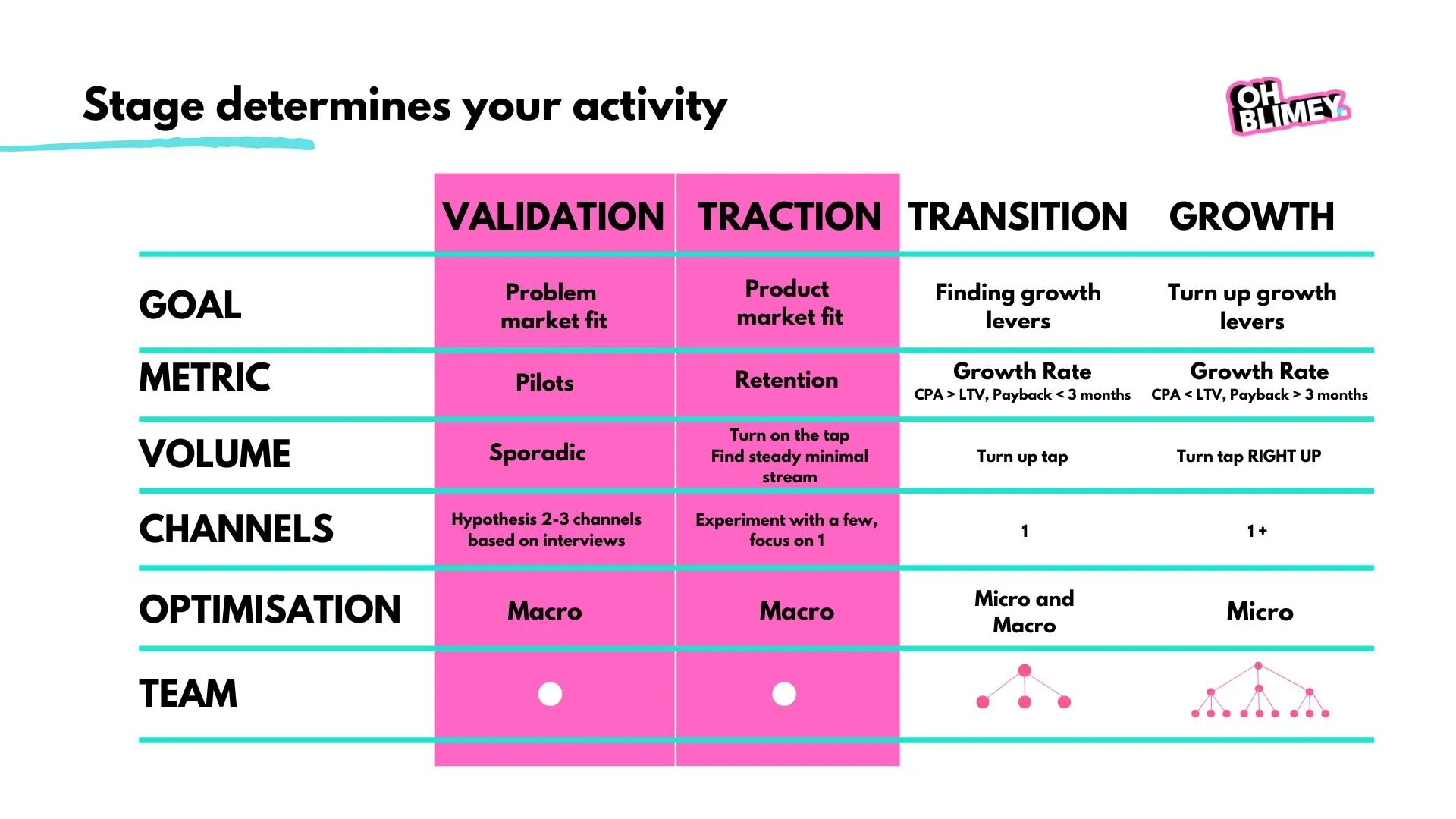
I've added my own perspective on these startup marketing basics to help you navigate this crucial aspect of growth.
3 activities to understand what’s next to build your startup’s marketing foundations.
Based on the startup marketing basics outlined above, here are three things I’d suggest you should undertake to understand what marketing you need now. Of course, if you want to have a chat with me and get the answer a little more quickly, give me a shout or learn about my services.
1. Identify your current business stage to unlock your marketing to-do list
Assess where your startup sits in its journey. Are you still validating your idea, building your first product version, or already acquiring early customers?
Your business stage directly determines which marketing activities will give you the best results. Map out where you are on Brian Balfour's growth framework to unlock the specific strategies most relevant to your situation.
2. Conduct customer research interviews
Arrange conversations with your target audience (or existing customers if you have them). Focus these discussions on understanding their pain points, how they currently solve the problems your product addresses, and the language they use to describe these challenges.
This research will inform and underpin what you need to be saying to people and why.
Side note: if you can’t find people to talk to about your startup, you may have a bigger marketing distribution problem at stake.
3. Create a marketing evolution roadmap
Based on your business stage and customer insights, develop a timeline showing how your marketing needs will evolve as your startup grows.
I’d suggest including key milestones where you'll transition from validation activities to retention strategies to scalable acquisition channels. Appreciate I make that sound sooooooo simple, right?!
This roadmap will help you anticipate resource needs and prevent the common mistake of implementing the wrong marketing tactics at the wrong time.
But remember, kids. Above all… effective startup marketing begins alongside product development, and not after you’ve launched.
