

No Keith, your customer didn't call your product "innovative"
The language gap that's killing your new product's chances
Walk into any startup ecosystem event and you'll hear the same words echoing around:
Everything is "revolutionary."
Every feature is "cutting-edge" or a "game-changer".
Every product will "transform the way businesses operate and create a TOTALLY NEW CATEGORY".
Meanwhile, your ideal customer is sitting at their desk thinking:
"I just need something that doesn't break when I use it".
There's a problem with the marketing industry. (Well, there are many, but you get what I mean.)
We've been conditioned into thinking that if we use words like "innovative" or "game-changing" to describe our products, customers will think we're amazing and instantly grab their credit cards.
Only to realise a few days later, weeks even, people think it's all a bit fake.
The gap between how you describe your product and how customers think about their problems can be shortened. It's pretty straightforward and, if used correctly, can help you to resist the urge to include these filler words in your messaging.
Why we default to marketing speak rather than use customer language for our messaging
It's easier to call something "innovative" than to talk to a customer and understand why they bought a product or switched software providers. These words feel safe. They sound important. We think they will make investors nod approvingly in pitch meetings. (Spoiler alert, they don't).
So instead, you pay customer research lip service, you think your hunches are better, and you create marketing, sales and product from the supply perspective - not the demand perspective. It leads to an approach we know is proven to ensure your launch is a failure.
There are many issues with building a messaging strategy around words your customer would never use.
Your website sounds like everyone else's. People don't believe you.
You're solving problems that don't exist.
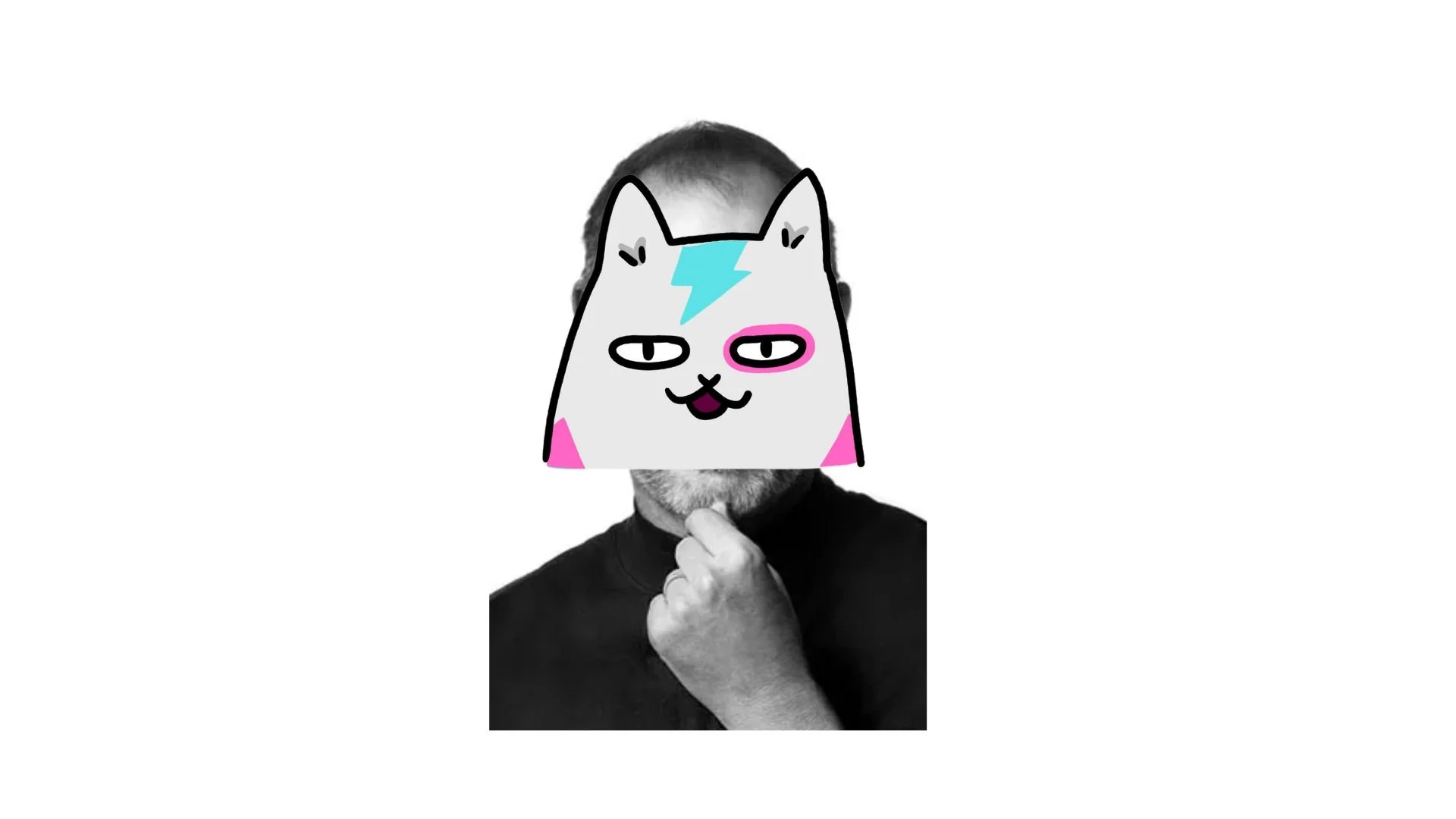
No babe, you’re not Steve Jobs.
What customers say vs. what we think they mean
Peter Drucker famously said: People rarely buy what your company thinks it's selling.
A few years ago I was working with a team that was convinced their tool was creating a "new category of workflow management".
Rolls off the tongue, right?
After a few weeks, I managed to get them to interview a few of their customers. There was initial resistance. They couldn't see the value in taking their team off important dev tasks in favour of speaking to customers to confirm what they already knew.
But we compromised, and they agreed to talk with a few customers.
Here's what came through: "I was tired of chasing people for updates" "The old system made me look disorganised" "I just wanted to know what everyone was working on, and not keep asking them for updates"
Not one person mentioned "workflow efficiency."
Zero talked about "revolutionising" anything.
Shock, right? They had practical, human problems that needed solving.
How'd we use this? We changed their messaging proposition to something that used the exact words their customers were using: "Stop chasing people for project updates."
The problem with using general language or jargon
I worked for a business once that regularly used these kinda words.
Everything was "____ simplified!" or "_____all-in-one".
It all came to a head when, whilst attending an event, I spoke to this guy who was on the receiving end of our (unwanted) cold outreach.
"You guys all seem really nice in person - but your marketing and the wording you use really puts me off".
Using language filled with these buzzwords has many implications.
If you can't explain the problem you're solving or in words customers don't understand - it sounds like you're kind of hiding something.
In a worst case scenario, describe something that's disruptive or transformative… and when someone starts using your product and it isn't - it's not great from a reputational perspective.
There's also another implication of using general language or feature-ridden statements, especially when you're early stage or about to release a product to your market: you're not developed enough to compete on features. Your emphasis needs to be on how you can solve a problem or help that customer to achieve a desired outcome.
How to find the words customers use.
Firstly, you can come to one of my workshops. ;)
But when they're not live yet, I'd suggest following this step:
Talk to recent buyers, those who have bought your product or a competing product in the last few months.
Ask them to describe the process they went through to research and buy a product like yours.
Trust me, when you get someone talking about the channels they used, the competitors they considered, and what it took for them to actually be nudged into signing up… you are going to unearth some serious language.
Examples of what this looks like in practice:
Instead of: "Our AI-powered platform revolutionises customer engagement through innovative automation."
Try: "Send the right email to the right person without thinking about it."
Instead of: "Penetrate new market verticals with our game-changing solution."
Try: "Get your first paying customer in a market you've never sold to before.”
Instead of: "Transform your paradigm with cutting-edge insights."
Try: "Know what's working so you can do more of it."
See the difference? The second versions use words humans say.
Summary
Many teams resist using customer language because it feels too simple or informal. "We're selling to enterprises," they say. "We need to sound professional."
But the thing is, enterprise buyers are humans too. They want their problems solved, not their vocabulary tested.
You may find the following articles good follow-ons from this:
How to market your boring product or service
Applying what you hear from a customer interview to your marketing
Have I made you realise it’s time to re-do your website messaging strategy? Yes? Cool… well, get in touch, friend.
