

Why won’t leads activate their trial? ‘Square peg round hole’ problems.
You meet someone who you think is a great fit for your product. There’s a bit of chat, they seem interested. Naturally, you offer them a free trial. They tell you that first thing tomorrow they are going to try it out, and they’ll tell all their colleagues about it as well.
You give yourself a pat on the back. Take that, Wolf of Wall Street. *Adds lead to Hubspot*.
The next day, it’s eerily quiet. There’s no activity. Over the next few weeks, there’s no sign of a log-in.
You could have sworn they were interested. You tell yourself, “it’s them not the product. My startup is clearly too early for the market (!)”
This was my experience when working in-house for a consumer startup. There’d be people we identified as being a great fit, and after having a conversation that we believed went well, they’d get a free 14 day trial of Careercake, our learning SaaS platform. We’d attempt to guide them towards creating a playlist of our content. That’s what we thought would clinch a deal.
But only a handful of people would ever activate the trial.
Why weren’t they subscribing?
It’s not what you think. It might not actually be because we’d been asking biased questions in our qualification. (You know, the type discussed in the Mom Test.)
There was another reason at play.
<Insert dramatic music>
We were solving the wrong type of problem.
We weren’t making it possible for them to subscribe.
The Cold Start Problem: understand it to open up your business development efforts
I recently took part and completed the Product-Led Growth course, by Vidyard alumni, Wes Bush. In the course, he talks about the Cold Start Problem, which in is based on the idea of leveraging network effects to launch and scale tech startups.
It was here I was reminded of the importance of categorising the different problems customers face. Wes states that once you’ve identified these problems, you can then determine which product-led strategy to pursue. (Product-led strategy = customer acquisition model - e.g. free trial, usage-based, etc.)
Not all problems are created equal.
The three problem types are: beginner problems, intermediate problems, and advanced problems.
Wes provided a great example with Vidyard and how they misaligned their strategy. They allowed prospects to upload and share videos, but the problem was, people were stumbling at the first hurdle: they weren’t able to create the videos themselves.
They were trying to fit their product-led model onto an intermediate problem, and by doing so, were cutting a good proportion of the market who would see value.
Identifying Careercake’s customer problems
Careercake’s b2b sales model was to partner with organisations with a Head of People, VP People and Culture, and Learning and Development Managers. When talking to prospects and engaging with the Careercake story they seemed really interested and felt we offered the type of product their teams required.
The below framework, based on Product-Led Growth, shows you how to break down the different types of problems. But this is rooted in what ultimately is user success. The long-term aim for your customers and what they want to achieve.
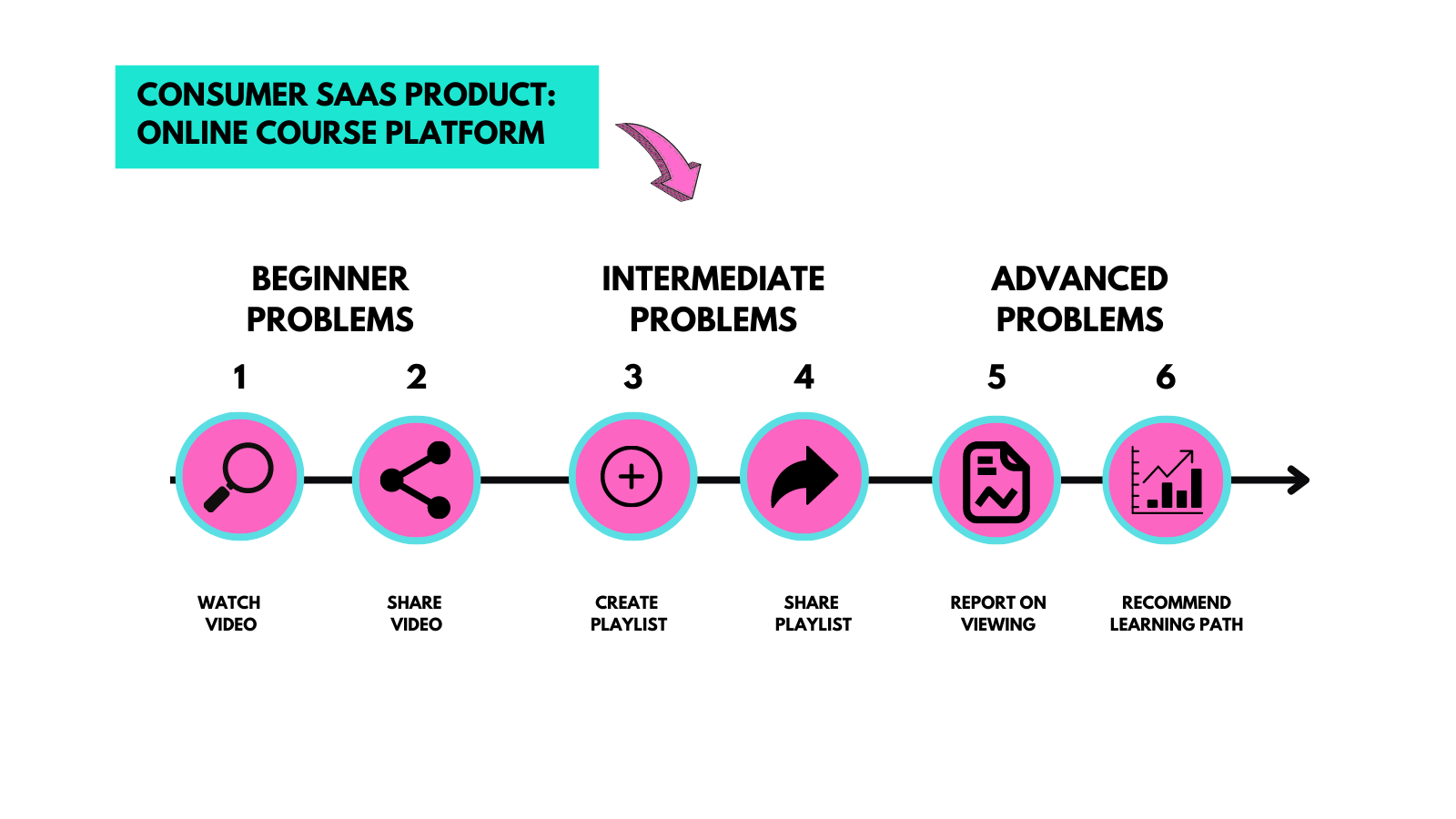
Customer Problems - Product-Led Growth
User success for a b2b customer for us was the ability to retain and engage their teams. A difficult feat for a product in the HR/recruitment SaaS space, yes. But we had dreams!
Think back to the example I provided earlier. We gave our prospects a 14 day free trial and guided them to create a playlist of our videos to watch and share with their colleagues.
To create a playlist on Careercake, you needed to not only create an account but also view the videos in the first place to ensure they were on-brand for the organisation. You’d also need to run a few past a colleague or two who may have a team with a performance issue. If you’re working for a big financial institution, you may also need to speak with IT to ensure the videos themselves would play because of security.
Let’s face it, after all this effort, I would even ask myself if it was worth it.
Similar to the Vidyard example, we were allowing users to create a playlist but unfortunately, they weren’t always able to take action on it because we’d neglected to research the beginners’ problems.
Realigning our startup product-led strategy with customer problems to get more leads activating
The three steps we took after mapping our customers’ problems that fuelled our startup’s product-led growth strategy looked like the below.
1) Revisit customer research to validate our assumptions of beginner problems
It was at this point we realised we needed to touch base with our customers and understand more clearly what was competing for their attention. What were they thinking, feeling and doing when they realised they had a problem and needed to pursue a different route.
I’ve written about how we’ve run customer interviews and how we applied them to our startup so please give this a read for a much more detailed overview.
In short, we found out the hoops our customers would have to go to get Careercake’s content embedded. People functions are already run off their feet, we wanted to enable them not add a new set of headaches.

2. We changed the hook (also known as a free wedge).
The first change we made was to keep the same sales pitch but change the hook. For us, we understood that we needed to show the content easily. Once people watched our courses, they were hooked.
Therefore, we would share with them a link to watch the video we’d put together or, and this was more effective down the line, we’d allow them to embed one course on their own platform. This created a kind of sticky approach which informed our product strategy further down the line.
3. We stopped replicating what our biggest competitor did.
Here we learned that what made us different was the niche product we offered. It was the video content itself.
So, because we were early stage and we wanted to land grab as much as we could, we changed from an all you can watch free trial for our b2b model to the hook. It’s easy to think your competitors are doing well, and they may be, but don’t get too focused on them.
Want to learn more about startup product-led strategy?
I partner with growing startups to add fuel to their stalling growth with product-led growth strategy for startups.
