

The Rules of Play(book) When Working with an Agency to Grow Your Startup.
“But what if I use a consultant and I don’t get any leads?”
(Well, don’t hire them to just do your organic social media.)
”No-one seems to be able to pick up my style and write the copy I want”.
(Hire a copywriter, don’t expect a junior to be able to pick it up with no direction.)
“They’ve told me they want to speak to customers. I’m worried will remember they pay for my service and cancel”.
(Don’t hire a marketing consultant. You’ve got a bigger challenge to acknowledge.)
Play”book”… geddit?
I’ll speak to founders who will go through several agencies/consultants/freelancers until they find the right fit. A bit like finding your first accountant, right?
It’s only natural. As you’re learning more about your product, audience and yourself, our you’re working out how to validate your startup’s problem your needs change. And so will the type of person or offering you work with at different stages of growing your idea into a business.
On a podcast with Business of Software, I was asked what’s the best way to get the most out of working with a consultant when looking to grow your startup. Having worked both sides of this - in-house as a marketing lead and as a consultant to early-stage startups*, there are a number of things I would recommend you ask or go to that introductory meeting having looked into.
It’ll help you to quickly learn if they’re right for you and if you can actually work together.
*Sorry for the shameless plug there, by the way. But you know… I’ve got two dogs that need feeding.
The two things I wish someone had told me when working with an agency to grow our startup.
If you’re going to get anything from this article, please take away these two main points:
A big mistake your startup can make is hiring a marketer too soon.
If you're at an early stage and there’s still a lot of problem validation / customer development work happening, it’s unlikely that your marketer will do what they think they’ll be doing. Some startups will say they’ve achieved product market fit based on a small sample of activity. But in reality, there’s still a ton of work to do. Marketing - as you know it - doesn’t quite exist yet. I wrote about this in my experience of joining a startup as its marketer recently for Growth Mentor.
Outsource at the beginning because you don’t have the time to learn and do it all.
Think you can do everything and that’s when the burnout creeps in, and everything you do is not to the level you need it to be. Delegate to those who’ve worked their ass off trying to learn and execute on this part. And when you get a feel for what works and what’s likely to allow you to build a repeatable process of bringing in business… then bring the role in house.
6 Rules of Play: What to Consider when Choosing a Marketing Consultant for your Startup
1. Understand what stage your startup is currently at.
Too many startups partner with an agency and task them with metrics designed for a business at a different stage.
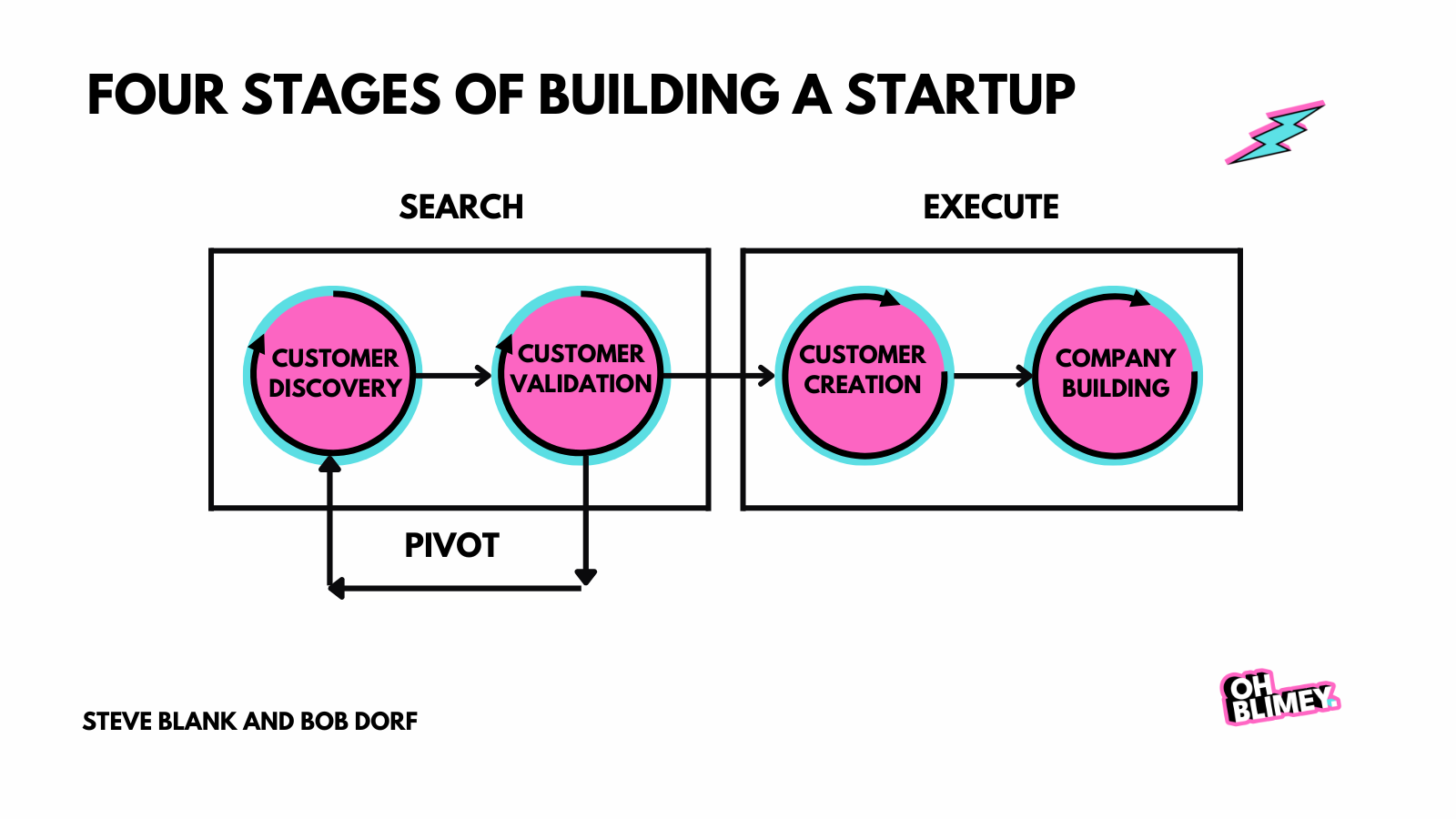
Use the model, The Four Stages of Building a Startup, by Steve Blank as a point of reference. (Image below).
For example: if you’re still validating the problem your product is looking to solve, it’s likely you’re in the “discovery” phase. That means the output of the marketing consultant should be around customer development, supporting founder-led sales, seeking message market fit.
Likewise, if you’re at the customer creation stage, it’s likely you’ve got a nice flow on customers and therefore the marketing consultant or agency may wish to support campaigns aimed at retention.
If you think you’re super early, check out the free guide The Startup Founder’s Guide to Validating an Idea.
2. Know the customer experience like the back of your hand so you… understand what’s working and what’s not working for you.
It’s on you to know what this looks like.
Let’s say you get them to drive all these leads but you’ve actually got a retention problem or a free trial to paid conversion problem. It’s money down the drain. A good way to map this out is to run a series of surveys to understand the customers’ experience, from their struggle right through to their use of the platform. Here’s a super basic version of a Customer Experience map from Hubspot.
3. Meet them where they are at to unpick their expertise.
What stage do they specialise in, and what metrics can they help you work towards?
I worry when I hear an agency say, “yeah, I work with startups!” Let’s unpack this. What does it actually mean?
Have they worked in a startup?
Have they supported a new go-to-market motion?
Have they marketed to your audience before?
Have they worked on a product that solves a similar problem?
If they have, it’s likely they’ll charge you accordingly. Remember, don’t balk at their pricing. You’re paying to speed up your learning by using their expertise. You don’t have to learn from scratch.
Red flag: Misusing terms. It grinds my gears when I hear a consultant misuse terminology, even though they’re packaging it up as part of their offering. For example, people who misuse the term “jobs to be done” or use “strategy” when really they’re reeling off a load of tactics. Look out for buzzwords and any you don’t understand or feel they are misusing, ask them to discuss.
4. Get a feel for your customers’ choice of marketing channels.
Understand what channels your customers use to research and buy a product like yours, then consider where the agency fits in.
Some clients I work with get frustrated when the agency delivering organic social media isn't delivering sales. The problem is, that’s not what that channel is about. When selecting channels to market to potential customers, have a feel for the following:
what channels they use when they first realise what their problem is
where they are going to compare available options
how saturated those channels may be with competitors.
Don’t worry, much of this will come from the interviews you are running with your potential customers. Here’s how we used interviews to get traction in our startup.
Red flag: don’t let the agency shoehorn you into using a channel just ‘cos they’re good at it or offer it.
5. You need to lead the strategy.
You need to take the lead on this, get them aligned, share your business model canvas and your product canvas.
You can’t leave your strategy in the control of someone that’s not based in your business, living and breathing it. Of course they can help you to shape it, but it’s your idea.
I’m not saying you need to share everything, but the more you hold back the more you’re setting them (and you) to fail.
6. Insist on them talking to a handful of customers.
Or, at the very least, ensure they watch recorded interviews you’ve conducted. It’ll help with things like voice of customer (getting actual phrases and language used by a customer), tone, what’s important, motivations… you name it.
I’d actually take it as a big red flag if they didn’t want to talk to a customer or listen to a recording. This, to me, is the foundation any consultant needs to be effective in creating marketing.
Bonus tip: Talk to the person who’ll be writing content on your behalf. There’s a lot of founder-led selling and using your personal brand involved, especially at the early-stages. Because if you’re not happy with what they create… you won’t share it. Trust me.
