It’s not them, it’s you: why it feels really weird when joining a startup as its first employee.
“The first follower is actually an underestimated form of leadership in itself. It takes guts to stand out like that. The first follower is what transforms a lone nut into a leader”.
When I meet someone who, like me, has held the position of employee #1 at a startup I find we tend to share the same ‘battle scars’.
It’s like we’re both part of some weird club.
And it’s because of this weird club that when I talk with first-time startup founders who are considering bringing someone onboard I love to show them Derek Sivers’ TedTalk: How to start a movement.
[Note employee #1 isn’t the ‘best’ staff member, rather, it’s that point where the founder lets someone in to help them realise and hopefully validate their idea, and be a part of the origin story.]
In his talk, Sivers shares the story of the lone nut and the first follower or, in his words, how to ‘watch a movement happen, start to finish, in under three minutes’.
I share it because it’s a great example of the dynamics that can occur when joining a startup as its first employee or a founder’s right-hand person or their ‘number 2’.
It’s a situation I have been in myself and, when I was showed this video a while back (thanks, Cerys), I was gob-smacked. It explained a whole lotta feelings.
I’ve decided to dig into it from the followers’ perspective, rather than the leaders’ perspective, to give you a glimpse into the context you’re likely to face when you finally think, “what the hell. Let’s join this crazy founder!’. (Read thinking of joining a startup if you want more practical examples).
Why being the first employee in a startup takes guts: a lesson in leadership.
Through the medium of drunk / high dancing guy and Sivers’ excellent storytelling, I could all of a sudden explain why, as a startup’s first employee, it felt both great and also really uncomfortable.
It’s a powerful lesson into leadership that works on many levels. But before any analysis, first, a quick run down of this nut story.
It begins with Sivers who shows his audience a video of a guy dancing alone.
“A leader needs the guts to stand out and be ridiculed” he says. “What he’s doing is so easy to do”.

Look, a lone nut, dancing on their own. What a silly nut.
[Yes, acorns are nuts].
👋 Love the blog but need actual human help?
Don't you worry. Beyond the free advice, I work directly with early-stage founders to sort out their growth. You can bring me in as a fractional CMO to build and grow your foundations, lean on me for a methodical approach to see if there's a market for your product with my startup validation services before you spend a fortune building the wrong thing, or design a custom go to market strategy to launch aligned to the stage you're at.
“Then comes along his first follower with a crucial role: he’s going to show everyone else how to follow.
The leader embraces his new follower as an equal. It’s not about the leader anymore, it’s about THEM”.
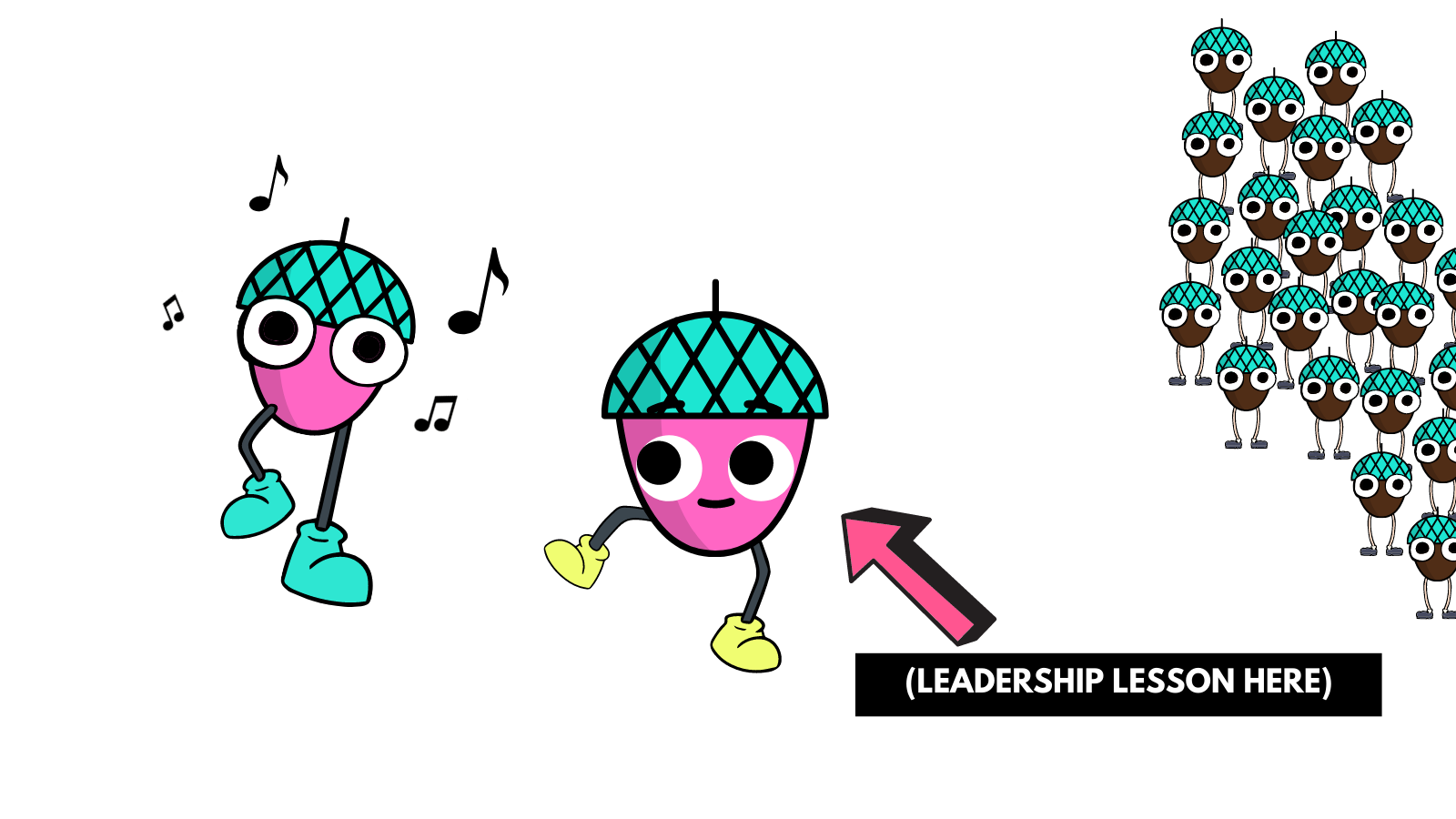
The first follower (aka employee #1 who is just as involved) joins in. (Whilst those who watch from the side lines wonder what the heck is going on).“Then, the follower calls to his friends”.
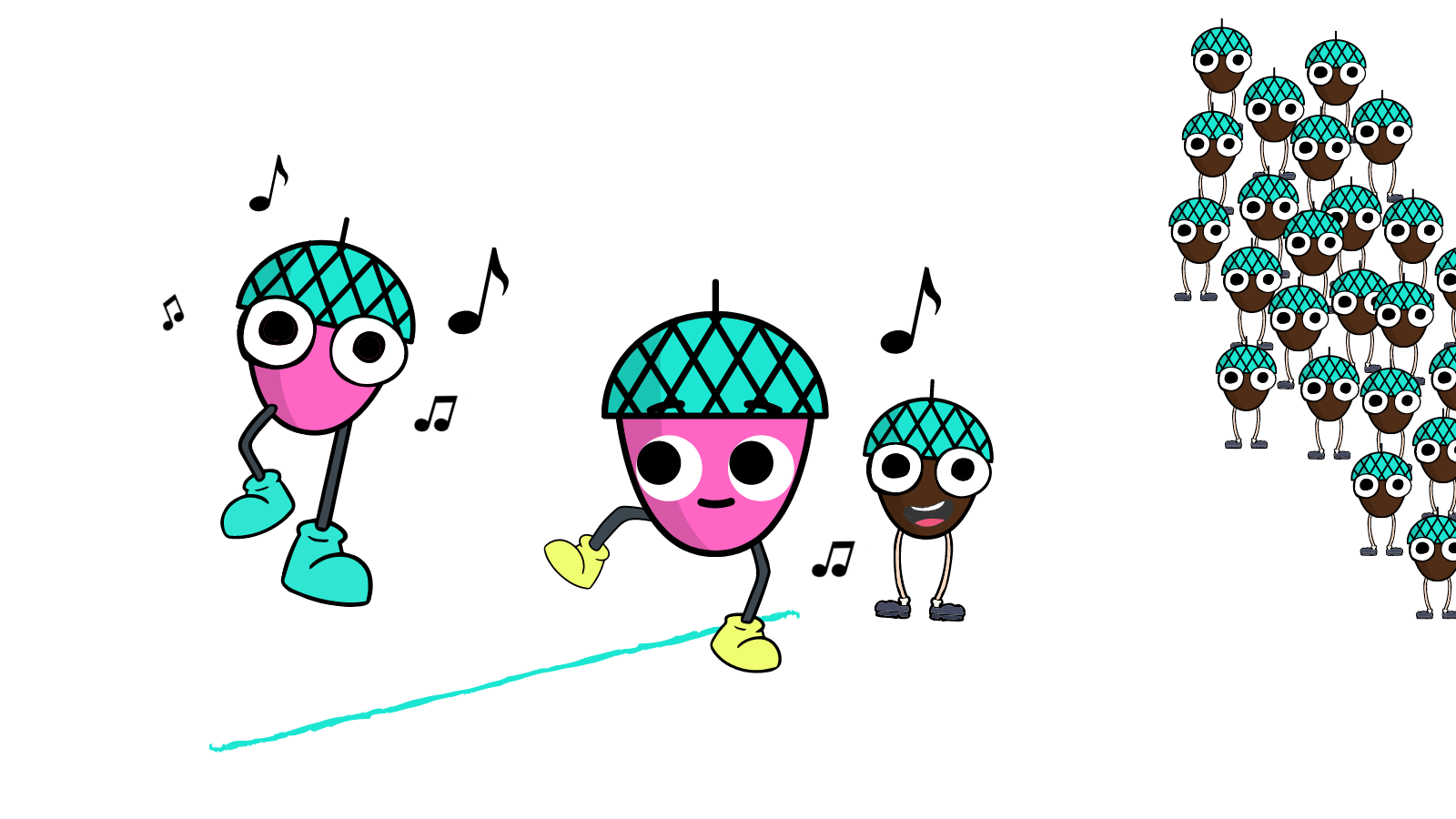
The first follower normalises what the lone nut was doing, and by doing so, shows their friends it’s actually pretty cool. 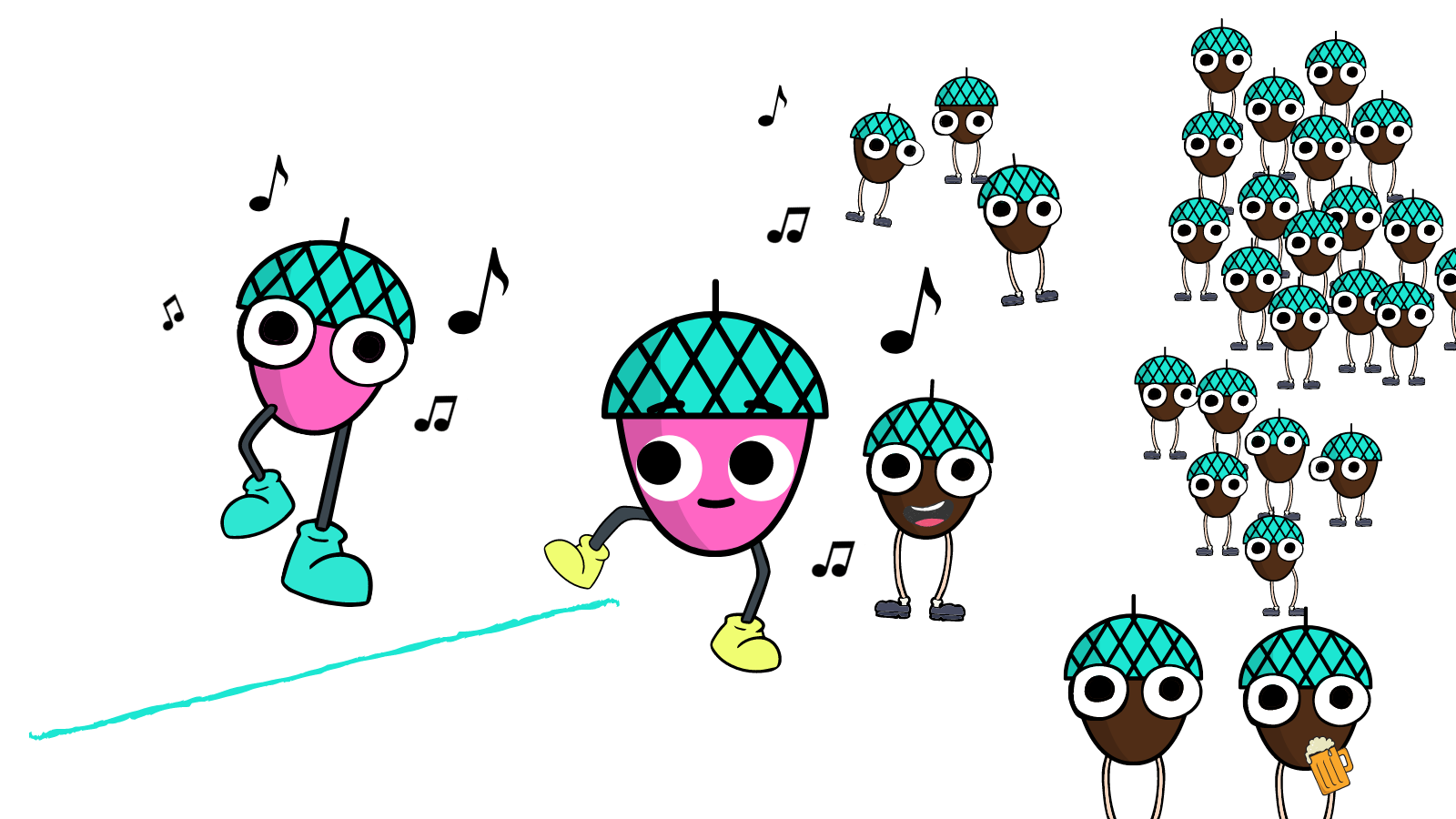
More people join in and everyone’s dancing.“The first follower is actually an underestimated form of leadership in itself. It takes guts to stand out like that.
The first follower is what transforms a lone nut into a leader”.
Sivers goes on: “then another follower comes to join them. It’s no longer a lone nut - nor, is it two nuts - three is a crowd, and a crowd is news. So a movement must be public. It’s important to show not just the leader but the followers because you find that new followers emulate the followers, not the leader”.
Unsurprisingly, as more people join in it becomes less risky.
It actually becomes pretty cool to join in with everyone. Those who don’t join in now kinda stick out. They stick out because they’re not part of the crowd.
That first follower doesn’t seem so mad now, right?
The founder/employee relationship in startups - setting the foundations
The pull of joining a startup isn’t the glitz and glamour, it’s the burnout and the branded t-shirts.
J-K-miss-thing.
For me, it was the chance to be part of the founding story and to help grow a business idea I was passionate about. I was pulled, not only to the product but, to the process we’d go through to get there. From our first lead and first big sale to our first major distribution deal.
Joining Careercake as employee number 1
Before all of this ‘glamour’, we needed to validate the idea.
It made sense to move closer to the business. I told my parents we were selling the house and moving to Wales.
At that time, Careercake was a YouTube channel, created by Aimee Bateman, in response to the lack of authentic careers advice available. It was still at the customer discovery stage and had only a handful of customers of its MVP. So it’s no wonder why my Mum and Dad seemed confused.
But we’d spoken at length about the potential of Careercake for years, and now Aimee found herself in a position to hire me. On paper it seemed mad - especially as I was “Miss Structure”. But, I decided to take the risk and we moved.
Thinking back to the leadership lesson above, Sivers says: “leadership is over-glorified. Whilst it was the shirtless guy who was the first out and he’ll get all the credit; it was really the first follower that transferred the lone nut into a leader”.
I love this. It highlights just how important that first hire can be in a startup because - as employee number 1 - it’s a pretty influential role, whether you like it or not. I totally realise I couldn’t be the founder; I don’t have the mindset, but I embrace the follower position because it gives some form of validation for getting in that car and moving to Wales.
Of course, it comes with its own stress. Wink.
Whilst a startup founder will be under immense pressure to validate their idea and grow the business, as the first employee you too will be under pressure - from a reputation perspective, not to mention the stress you’ll assign yourself.
I learned some pretty important lessons during this period. Some of which may be useful to you if you’re considering becoming a startup’s first hire.
1) Don’t fall in love with the founder, fall in love with the product.
I learned this lesson when I joined Aimee as her as employee number 1.
It can be really easy to fall in love with a startup founder: their enthusiasm, their drive, and their story can get you hooked. But what happens if this relationship turns out not to be what you thought it would be?
I respect Aimee 100% and absolutely love my time working with her. For me, however, I loved the problem Careercake sought out to solve, the market it was operating in, and the product itself that kept me engaged. It was a bonus that we got along and shared the same sense of humour. Mwahahahahhahahaha.
2) Don’t dismiss personality tests.
Of course, there was a bedding-in period. I mean, we were working in a startup environment where it can get tense because, let’s face it… it’s really bloody hard work.
“The demands of customer discovery require people who are comfortable with change, chaos, learning from failure and are at ease working in a risky, unstable with no roadmap”
(Blank & Dorf, in The Startup Owner’s Manual)
Aimee was a first-time founder. I was an eager marketer completely used to structure, budgets, oh, and did I say structure? Plus, we couldn’t have been any different in terms of our communication styles.
We took a series of personality tests to learn how one another responds best in different situations. The thing is, we could be united by wanting the same thing (growing the business) but that didn’t mean we’d be the same in every other part of the business.
Here are some we tried and used successfully:
-16 personalities
- Colours personality test
What was interesting was over the four years working at Careercake my personality traits changed.
Today, I am a proud INFJ… but I’ve become slightly extroverted over the years. Gasp!
3) Don’t try and re-create the culture that worked for you at a previous company.
Just like how you wouldn’t copy a marketing strategy - you can’t recreate a culture.
It may seem obvious, but when you’re in a startup and starting from scratch you’re constantly looking for shortcuts and ways to get to the answer as soon as you can. Culture can’t be replicated. It becomes inauthentic very quickly if you do.
As an early stage employee you’re also responsible for the kind of culture that is created in the startup. It’s about setting examples and creating an environment where people can be themselves. Obvious, I know.
Summary
I wrote this article because whilst many visitors come here for my marketing to tech startups ideas, I can’t help feel it important to really stress the lessons I learned joining the founding team at a startup.
You can have the most amazing tech, product and vision, but people are what’s going to get you that investment raise, that next star hire and that dream customer.
It’s the people that will determine if you turn up for work, go that extra mile, and genuinely like yourself at the end of the day.
Fluffy, I know. But it’s true.
P.S. Now, watch how to start a movement… please.

About the Author
Lucy Heskins
Growth advisor and fractional CMO who helps early-stage startups scale without the usual tears, tantrums, or burning through piles of investor cash. When she isn't shouting into the void about product validation and go-to-market strategy, she's usually sharing brutal-but-fair startup marketing reality checks on LinkedIn.