

B2B content marketing strategy: how to say “buy our stuff” without actually saying it
Ever found yourself talking to a prospect and they’re not quite ready to buy? You say you’ll keep in touch, and then spend 3 hours researching a ‘useful article’ to send them. Six months later, you wonder why they are still ghosting you.
What about when you start a newsletter, but, because leads have gone quiet, you’re told to shelve it and instead focus on creating content to attract ready-to-buy prospects. Despite all that planning, all that design…
These are just two examples of how a business may realise they are in dire need of a b2b content marketing strategy. A blueprint, if you will, to understand precisely what to create, for who, and when to send it.
Welcome to this mini guide to help you understand what b2b content market is and, ultimately, how to stop creating content for the sake of it. If you keep reading, I finish off the article with a cool little case study looking at how Grammarly creates marketing content for business enquiries. You’re welcome.
What is B2B content marketing strategy?
B2B content marketing strategy is about promoting and creating demand for your product or service, and keeping existing customers engaged. The clincher? The customers in this case are other businesses.
The idea is to create content - whether that’s through blog posts, videos, podcasts or email marketing etc - to help guide someone through the main stages of the purchasing process.
Unlike B2C content marketing, it is focused on nurturing someone through the sales process with a focus on relationships. It’s a lot less transactional than business to consumer marketing, and will often be used in conjunction with a few channels.
B2B marketing - business to business
B2C marketing - business to consumer
Example: Let’s say you’re selling accountancy software. If your customers are businesses with, say, up to 20 staff, the marketing and sales you conduct will be considered as business to business. Yes, you are selling to an individual but it’s likely they make up a decision making unit whose aim is to buy on behalf of the business overall.
Many businesses creating their content marketing strategy stop at lead generation, however.
This, my friends, is a big mistake.
The most successful B2B content marketing strategies consider the full lifecycle of that customer and how to keep their business for years to come. I’m about to show you there’s a systematic way to approach this if you’re looking to create one yourself.
Let’s start by taking a step back, though. To understand the nuance of the content you need to create, we need to look at the quirks B2B marketing has.
B2B marketing characteristics include:
A long sales cycle. That’s likely because you’re selling something that’s complex, it needs customisation, and/or you need a human to guide the process.
A buying cycle made up of a number of stages, from realising you have a problem to solve, to researching potential solutions, buying the product, and then continuing to use it.
Content aimed at three different users. Note, people can occupy all three roles in certain businesses. These are:
The cheque payer, the person who ultimately signs off the contract.
The manager. The person who may use your product/service in a different way to the…
End user. The person who is most often the champion.
The B2B buying cycle and how content supports it
This is a framework created by Eugene Schwartz. It assumes that when making a purchase, everyone goes through these five stages. At each stage the messaging and formats a business may use to create content to get your attention will change, going from indirect to direct.
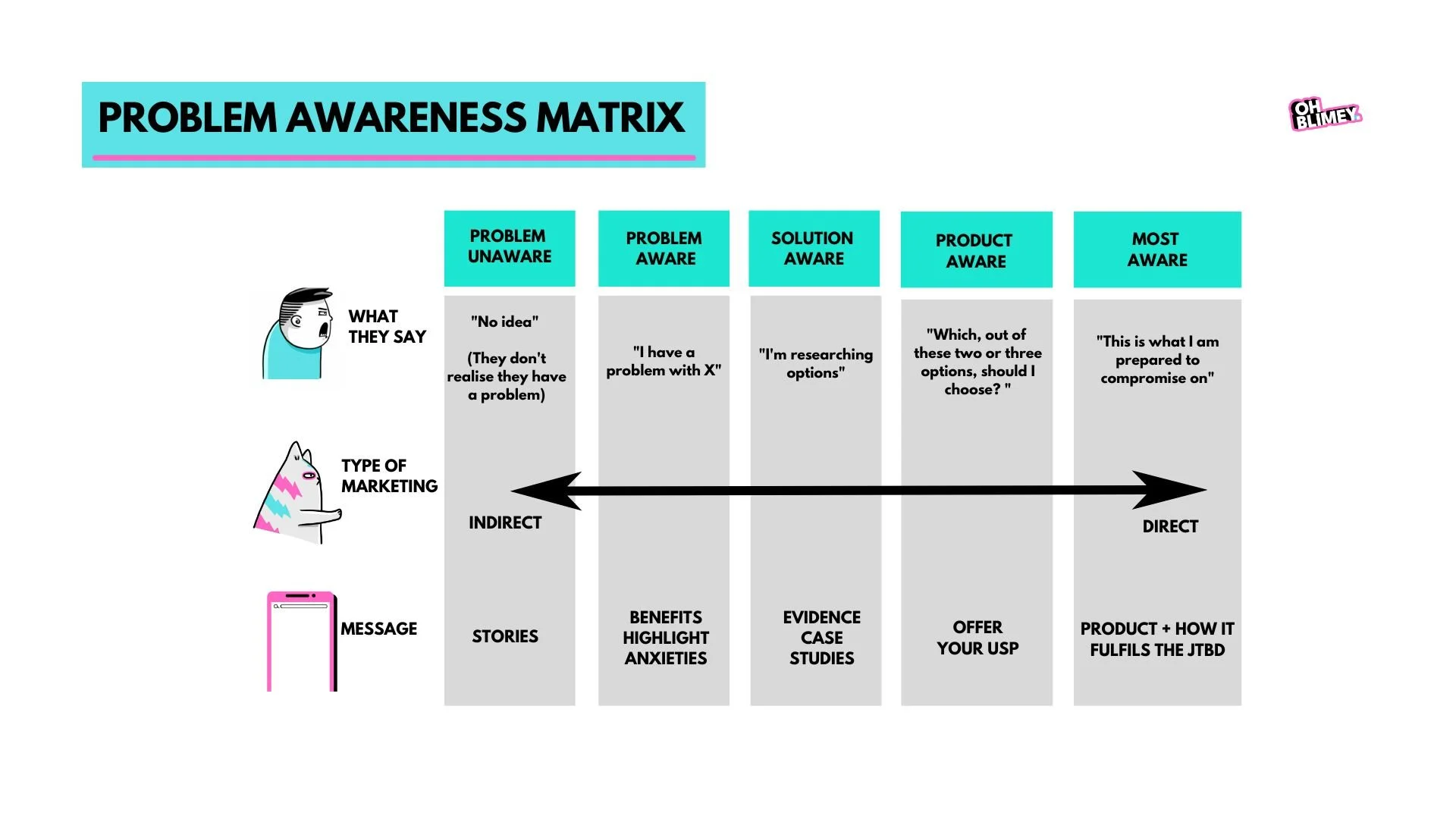
The stages of the problem awareness matrix:
Problem unaware - quite simply put, is when you don’t realise you have a problem
Problem aware - something triggers for you to realise you have a challenge ahead
Solution aware - is where you start to research options to help solve your problem
Product aware - is where you know which product category you want to use
Most aware - is where you have whittled your choices down to one or two options, and now you’re considering what to compromise on.
How to use it:
It’s all well and good understanding the theory, but how do you apply it? The content marketing strategy you create will be determined by factors such as your business model, your priority customer, and more.
What they say: this is an articulation of what your prospects are “saying” at each stage. If someone was in the “problem aware” stage they are very unlikely to engage with content that’s created for the product aware stage for example.
Your turn: Collect a few examples of what you think your ideal customer is saying or asking at each stage to start shaping your content.
The type of marketing and the message changes over time. As a prospect learns more about their problem and how they may wish to solve it, the language they use will change. The focus on the content marketing you create will need to change. For example, a podcast interview is likely to resonate at an earlier stage. A pricing table or comparison chart is a lot more direct and can afford to be more sales-driven.
Your turn: When talking to prospects, ask them what channels they used to get to you to determine the right mix of channel and message.
Skip the homework: get me to audit your sales and marketing content.
The most common objection with creating content this way:
”Yeah, but I only want to market to people who are ready to buy!”
Don’t we all, my love? Unfortunately, it doesn’t quite work like that. As B2B marketers, we need to ensure our content is created for all stages to keep the pipeline full.
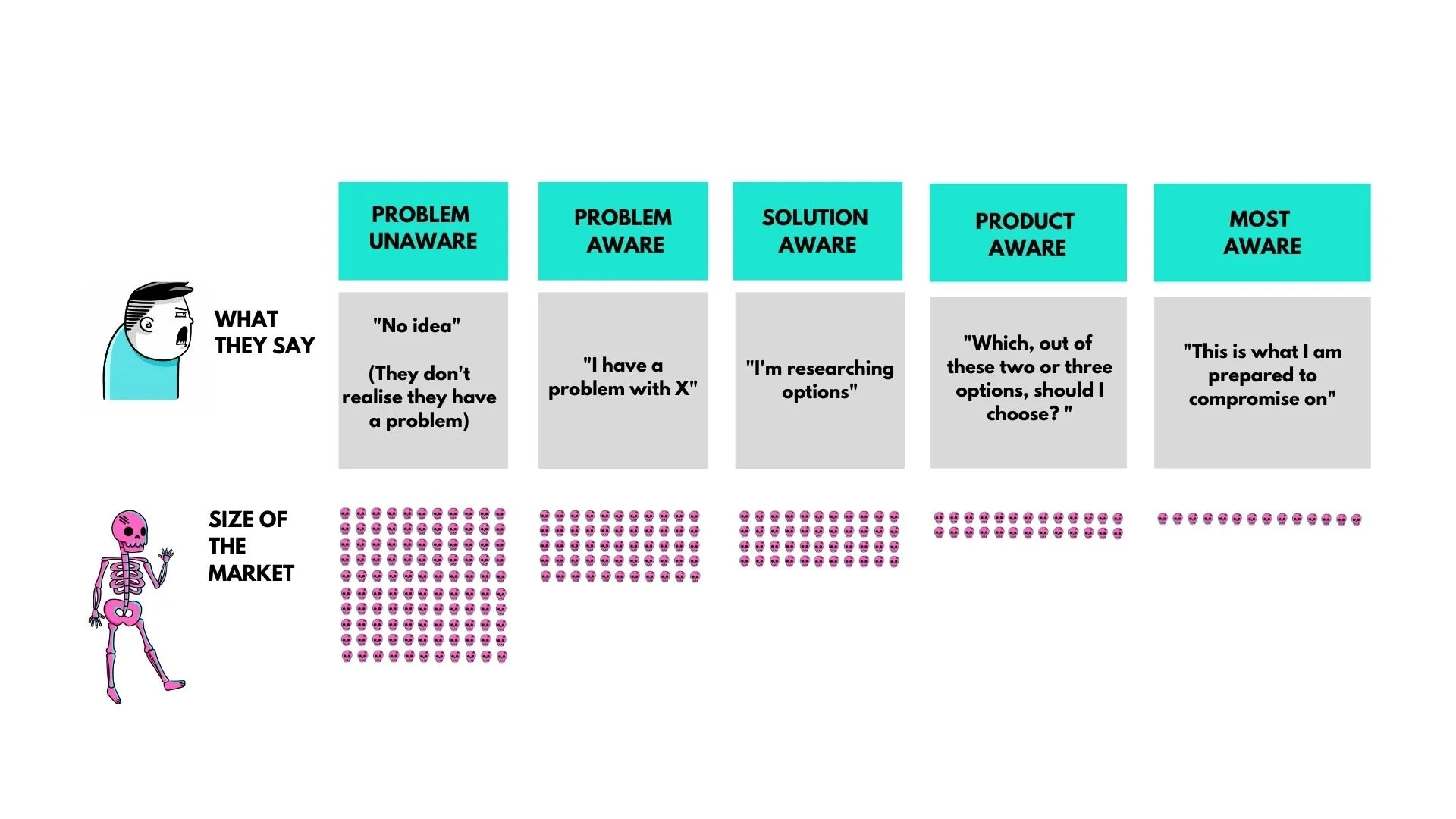
Look at the size of the market below and how it changes. There’s likely to be tons of people in the problem unaware and aware stages, but a very small percentage of this will be at the most aware stage.
The key components of a B2B content marketing strategy
Your audience. who they are, where they are based, what questions they ask, and who they’ll be comparing you to are all key considerations.
Your customer lifecycle. Don’t just think about leads, think about how to get on someone’s radar earlier in the process, consider how to show them the benefits of your offering versus competitor 1. And don’t forget how things like email marketing can be used to re-engage dormant customers.
Your goals. These will be determined by the stage your business is at, and where in the pipeline you’re running a little low. Are you trying to get more sales-ready leads? Yes, well what b2b content have you got going out to attract people at the problem aware or solution aware stages?
Your content itself. This will be determined by your go to market channel approach. For example, if you have a sales-led go to market strategy, it’s likely you’ll need to create things like blogs, whitepapers, lead magnets, business cases etc.
Your distribution channels. Oh, this is a biggy. You can’t just post your blog on LinkedIn and expect Rand Fishkin-esque impressions. There are in fact three different types of channel - owned, earned and paid. You’ll need a plan for each to ensure you’re reaching different people at the different stages of your buying timeline.
Your marketing automation tool. Once someone downloads your whitepaper or signs up to your newsletter, you need a plan to keep them engaged. Whilst lead nurturing is a separate topic for this article, the aim is to identify ways for your audience to tell you where they are in the sales process. A marketing tech stack using an automation tool, like Kit or Hubspot can help.
Grammarly: a b2b content marketing case study
You’ll know Grammarly, the online writing assistant that makes anyone cry after the suggestions it points out that suggest you didn’t learn to write at school. Whilst you may use the tool as an individual, it’s used by education and businesses, and counts the likes of Salesforce, Expedia, Blackrock etc as its business customers.
For me, Grammarly presents a great example of B2B content marketing strategy. I’m going to walk you through each of the stages we have covered with some examples.
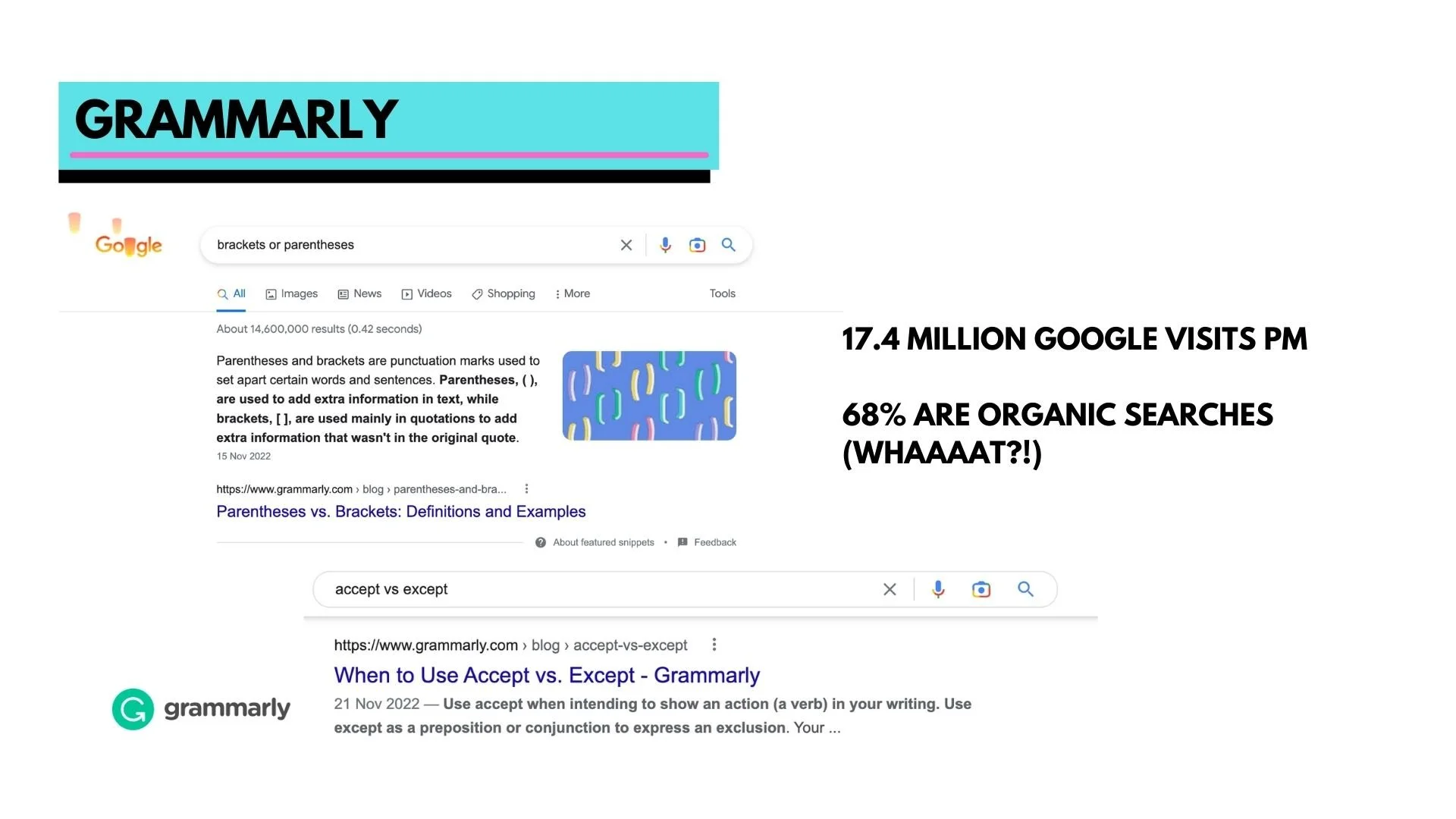
Stage: Problem Unaware
Content type: Indirect, blog
How many times have you Googled the correct spelling of a word, or whether or not to use an apostrophe?
Grammarly knows this is a common search query that’s likely to pull through people in, and creates blog content around this. 68% of their traffic from this activity alone is based on organic searches.
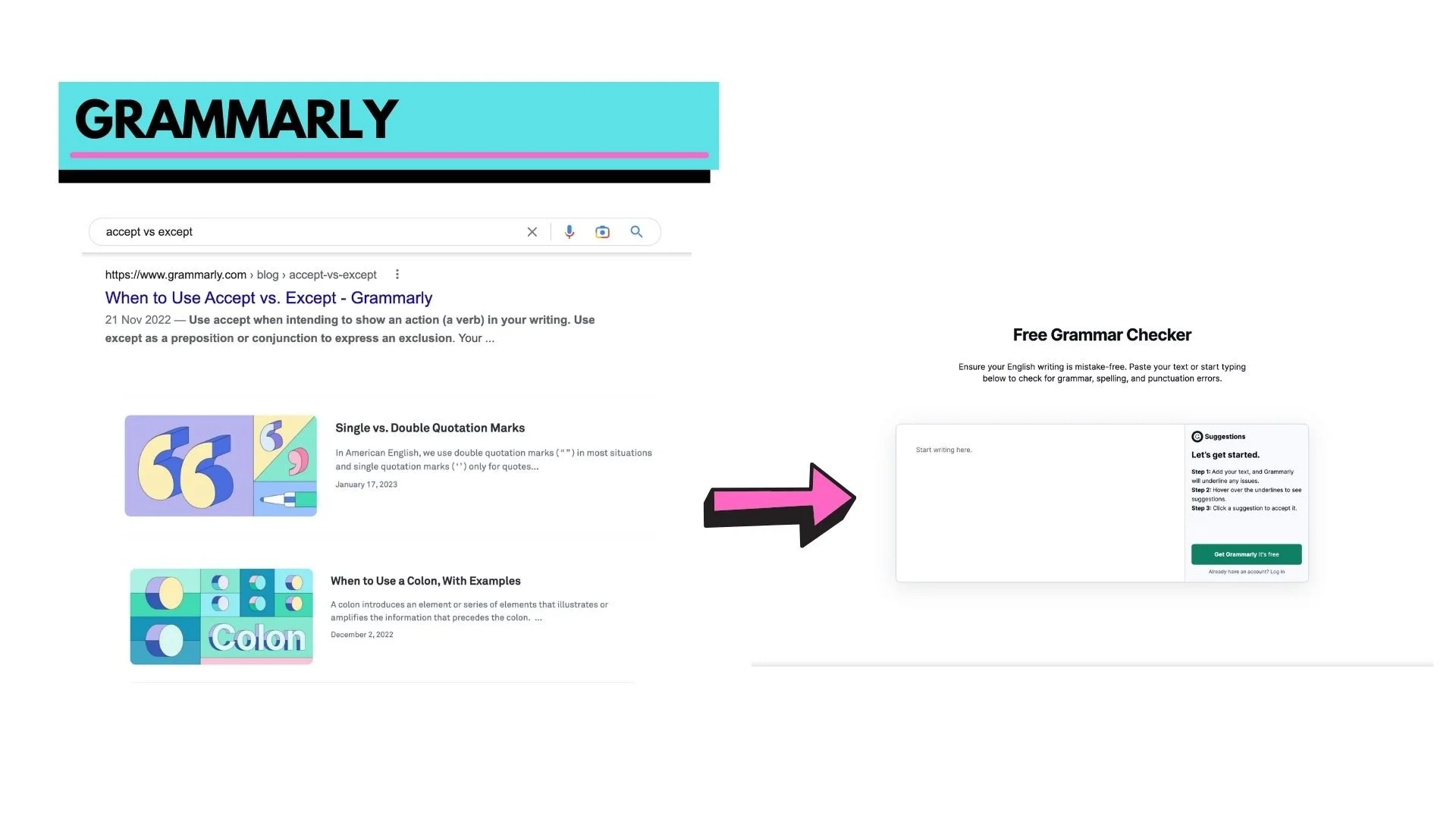
Stage: Problem aware
Content type: Indirect, tool checker
Grammarly leans further into these common misspellings and has optimised for a number of clusters of queries.
This one starts to promote the free grammar checker. Note, there is still no selling and no need to create an account to use it (yet). The idea is to get the Grammarly brand in your mind earlier on.
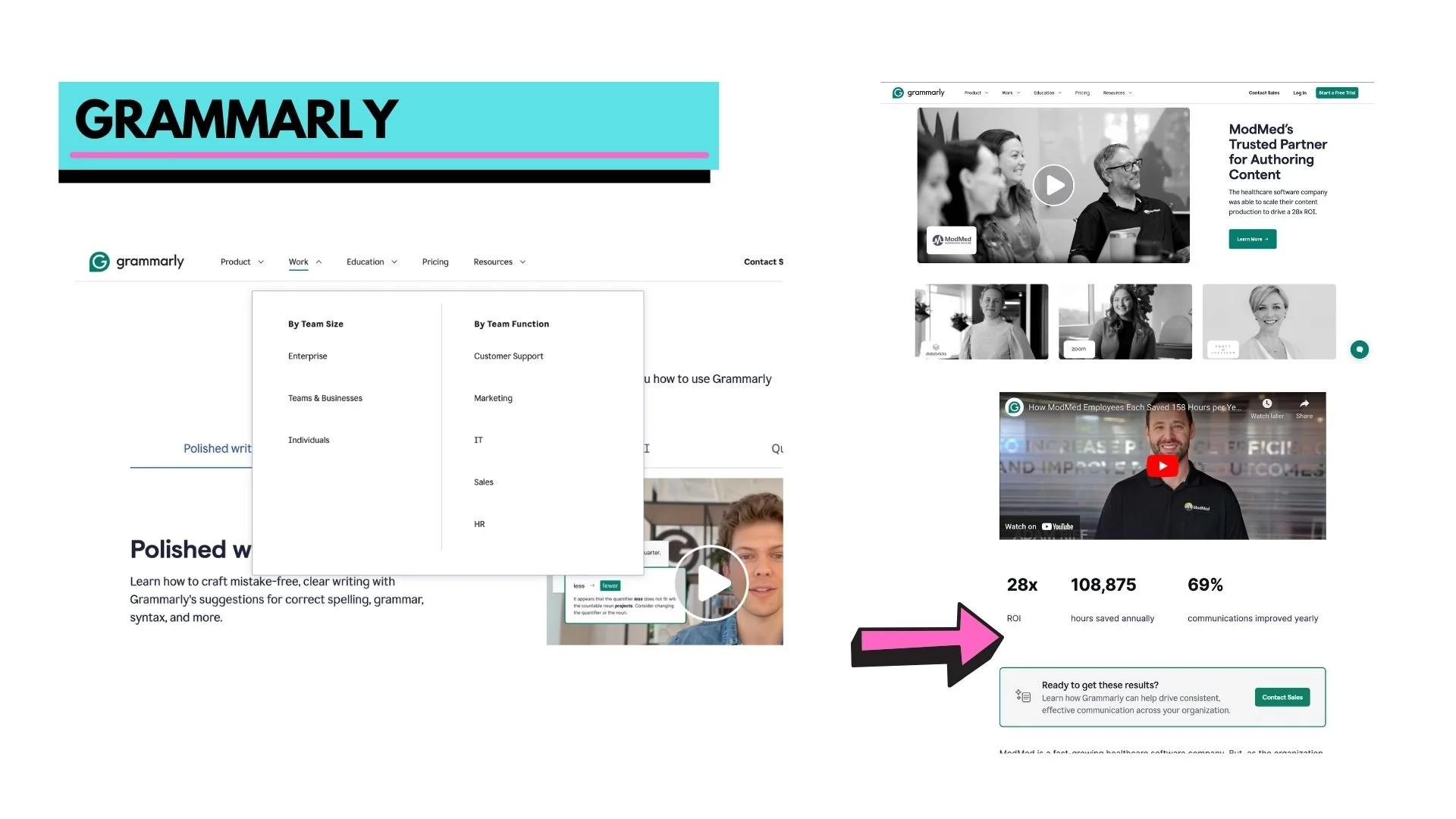
Stage: Solution aware
Content type: Direct, use cases
Next up, we have blog content optimised for the business user. You’ll see here they list a few examples of how their ideal customers benefit from using Grammarly.
These then link to video interviews, with real people sharing messages for the user and managers.
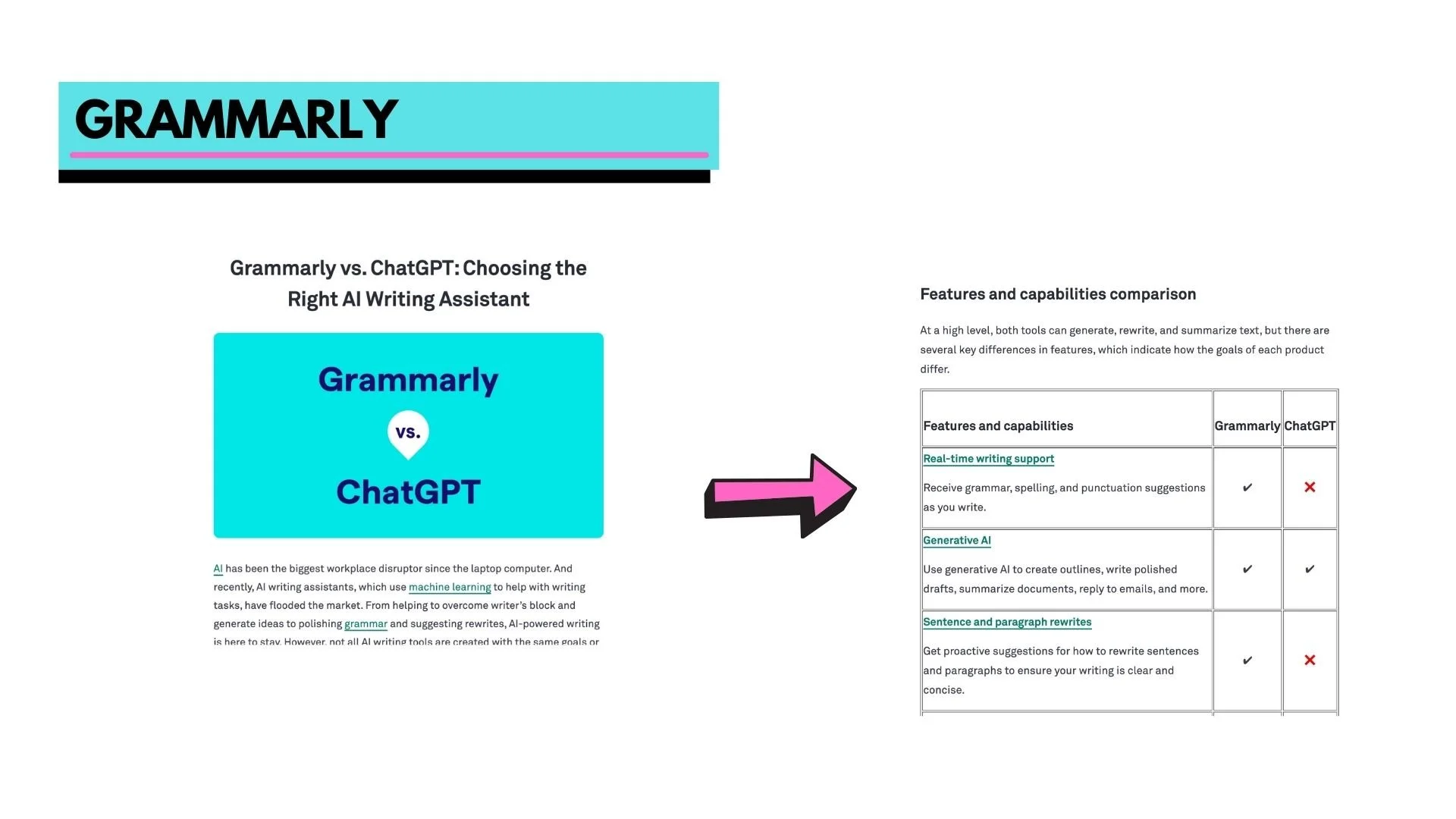
Stage: Product aware
Content type: Direct, Comparison pages
And at the last of the stages, we have a page showing users who are likely to be in the product aware stage the benefits of Grammarly versus its biggest rival at the time, ChatGPT.
Note, they are being super direct in their content marketing as they understand this landing page will answer the questions around compromising.
Summary
And there we have it: a systematic way of creating a b2b content marketing strategy for your business. At the very root of this is talking with your customers to understand how they research and buy.
Want to learn more? You may want to learn why your request a demo is hurting your sales process.
If you’re looking for assistance with marketing your product or service, get in touch.
