

Why the ‘one-stop-shop’ positioning approach makes me want to throw things
I worked with one team where the marketing executive was told to create campaigns that speak to manufacturing companies and tech startups and healthcare providers and retail businesses.
Their messaging became so generic it might as well have said: "We do business things for business people."
I read something the other day:
"Good marketing is stuff for your people, not people for your stuff."
Whilst the concept, from Allan Dib, isn’t new, it’s a simple way to get across a big point of contention when it comes to marketing a business.
Just because everyone could use your product or service doesn't mean they should (or will).
Yet here we are, panicking about focus. We’re convinced that putting all our eggs in one basket will mean risk. The risk of being able to make payroll, the risk of looking like something doesn’t work.
It’s funny how the word ‘focus’ in the new business world has never had a positive spin. It’s not seen as exciting as those other words “risk!” and “hustle!” that haunt the startup lexicon.
The patience problem nobody talks about
There's a patience issue in the business world; more so in the startup world. For the impatient amongst us, the idea of focusing on one thing at a time is genuinely terrifying.
"What if we're wrong?
What if that one segment doesn't work out?
What if we miss opportunities elsewhere?"
I get it. I've been there working for a team that watches the runway shrink whilst trying to decide which market to back.
But here's what I've also seen. Companies that try to hedge their bets by serving multiple sectors with marketing so watered down it might as well be washing-up water. (For more info on market selection, try how to choose the right market).
The problem of marketing in a saturated market
Let’s say you’re launching a new service in an incredibly busy market. The category is established, people “get” what you do; and there’s nothing really novel. (Sorry).
Business books will tell you you’ve essentially got two options to grow:
Create a proper niche and charge accordingly
Go for a land grab strategy - pile 'em high, sell 'em cheap
Option 1: Create a niche
Creating a niche or going after a niche market is also known as resegmenting the market (Steve Blank). In essence, this is all about identifying an underserved group who aren’t having their needs met. And so what happens is they search for a specialist.
Because you are building/offering something specialist, the only way you can make a sustainable business model is to offer it at a higher price. That’s because it’s going to cost you to build something specific, and it’s likely fewer organisations match this criteria. So your business model is likely to charge more.
For example, think of specialist recruitment agencies or software companies catering to a specific market sector.
With all this in mind, do you think generic, one-size-fits-all messaging is going to justify your price point?
Option 2: go wide, go cheap
The other option is to build something that just about does the job, and doesn’t cost as much to acquire a customer. As such, you charge less for your offer.
With this approach, a general messaging strategy makes sense because your differentiator is… price. It assumes that you don’t need a complex sales process or human to close a sale. Your market isn’t difficult to find and acquire.
For example, in the software world, think Canva. It’s the cheap/cost-effective alternative to the designer.
Why the “one-stop-shop” positioning approach makes me want to throw things

Okay, that's slightly dramatic, but hear me out.
It makes me want to throw things when used in the wrong way.
When businesses describe themselves as "all-in-one" or a "one-stop-shop," they do so, thinking it’ll help them to capture more of the market.
They do so thinking it’ll reduce switching costs - “why would someone need to go anywhere else if we also offer (insert something random like umbrellas or another unrelated service)?!”
But if you offer something specialist or targeting a small, specific market in order to justify a higher price point, the misalignment in this messaging is going to cost you big time.
The marketing blame game
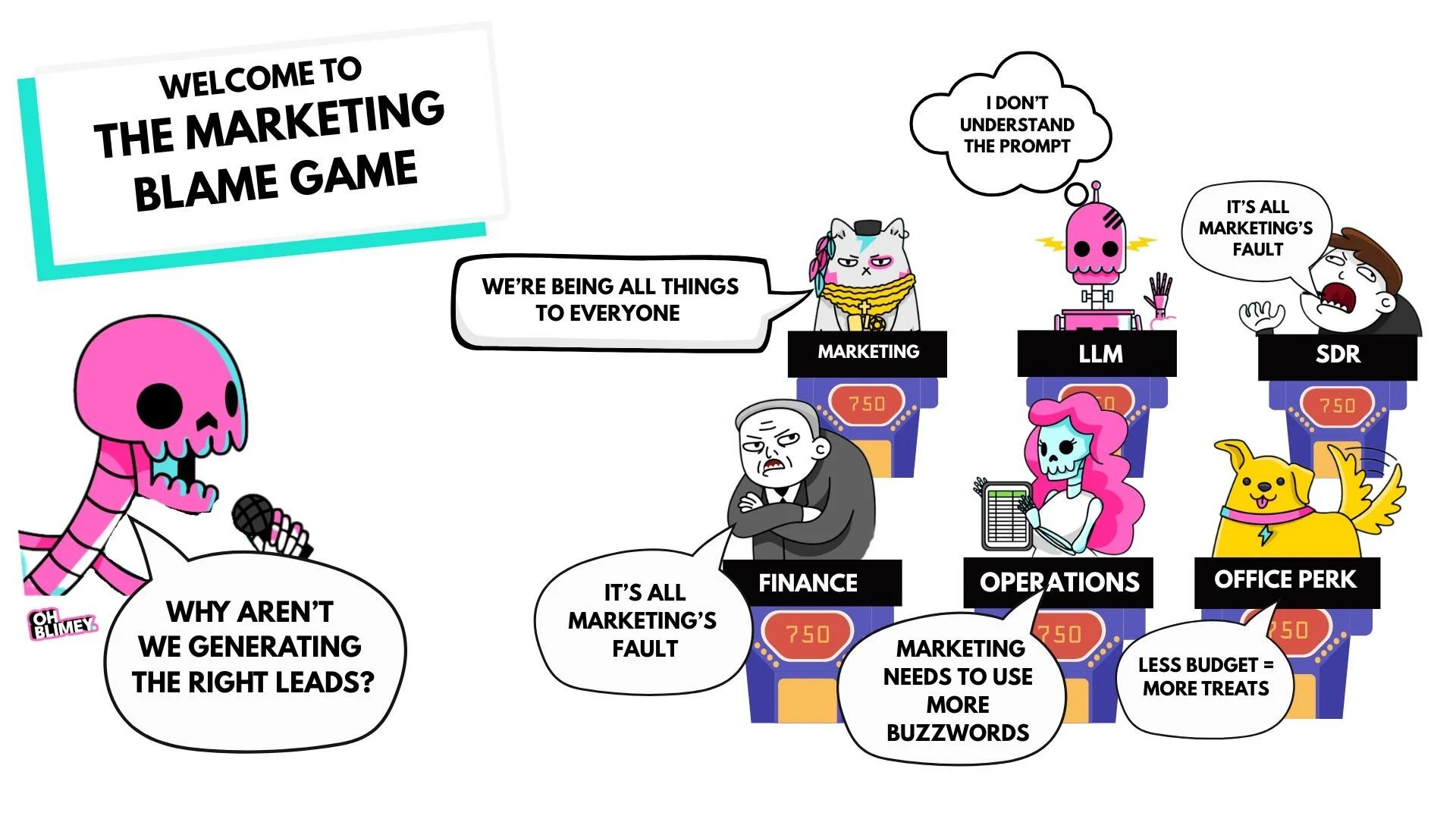
Let’s say you use the positioning of “one-stop-shop” for your service that’s actually specialised and suited to a niche approach.
Give it weeks, maybe months, and you’ll see results are not coming in. Things, sales, revenue - they’re not materialising.
Cue the marketing blame game. Where the team, consultant, or founder ‘doing’ it gets unfairly hammered.
I worked with one team where the marketing executive was told to create campaigns that speak to manufacturing companies and tech startups and healthcare providers and retail businesses.
Their messaging became so generic it might as well have said: "We do business things for business people."
When the campaigns didn’t perform, marketing was blamed for not being "creative enough" or not understanding the audience.
But the real issue is that there isn't one audience. There are four, five, or six completely different audiences with different pain points, different buying processes, and different budgets.
The paradox of being niche
"But won't there be fewer customers if we focus?"
Yes, probably. But that's rather the point.
When you niche down properly:
You can charge more because you're solving specific, painful problems
Your marketing becomes focused and actually resonates. (If the response rates are “low” chuck some more resource at it, please)
You become the obvious choice for that particular type of customer
You stop competing solely on price
Will fewer people find you? Possibly.
But the ones who do find you will be much more likely to buy, stay longer, and pay what you're worth.
But, here’s what can happen when you position yourself as the specialist rather than the generalist: customers stop shopping on price and start shopping on expertise.
Nice, eh?
A manufacturing company with a complex supply chain problem doesn't want the provider that "also does manufacturing alongside retail and hospitality."
They want the team that lives and breathes manufacturing challenges, understands their regulatory environment, and has solved similar problems for similar companies.
They'll pay more for that expertise because the cost of getting it wrong is significantly higher than your fees.
Summary
The most successful B2B service companies I’ve worked with have figured out this focus thing. Focus is what makes a good go to market strategy work, especially if you’re early stage and still working things out.
Your marketing team can't fix a positioning problem. No amount of clever copy, brilliant creative, or targeted advertising can overcome fundamental confusion about who you serve and why they should choose you.
In the famous words of April Dunford, “Marketing can polish a turd. Positioning can turn a turd into fertiliser”. Read more about my startup positioning journey by applying her insights.
So before you brief your next marketing campaign, ask yourself: are we trying to sell to our people, or are we still trying to find people for our stuff?
The difference will determine whether your marketing works - and whether your marketing team keeps getting blamed for problems that start much further up the chain.
Oh, and if you’re going to use “one-stop-shop” USE IT IN THE RIGHT CONTEXT. ;)
