Building a subscription model with no experience & limited cash.
I find the world of subscription models really interesting. I believe it forces us, as marketers, to really think about the customer’s buying journey and the overall customer experience. Getting the intricacies and details needed to create the right experience of a user often walks the fine line between churn and recurring revenue.
In other words:
“It’s not what your product can do, it’s what it can help your customer to become”
Why offering a subscription makes sense:
You can get a predictable stream of future revenue
Recurring revenue streams reduces the need to acquire more customers
Get the ratios right, between your acquisition costs and your lifetime value and you’re laughing all the way!
Of course, it’s not that easy, otherwise, everyone would do it. There’s the other stuff you have to bear in mind, the most important being this:
With a subscription model, you need to market to all types of customers - new, existing and former - and here’s the clincher: you need to do so, all at once.
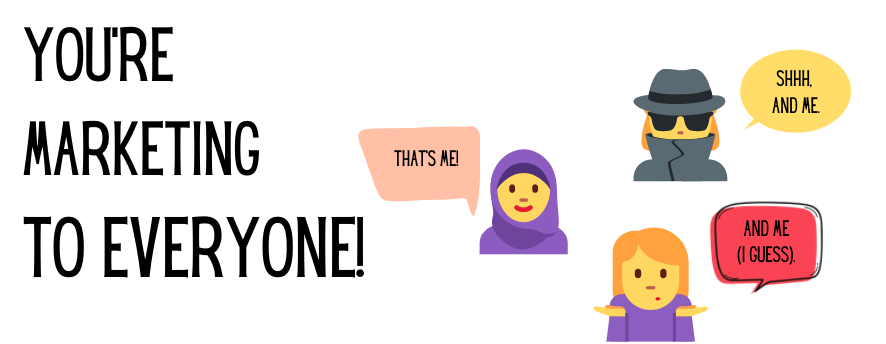
Forget the traditional buying cycle where you needed to generate brand awareness, move the prospect down the sales funnel with various marketing assets, get them to purchase and boom! You’ve got your customer locked in for 12 months.
With a subscription model, you’re only as good as your previous month. Just because someone has converted into a paying customer in months 1 and 2, doesn’t mean you’ve got their guaranteed business in month 3. Your proposition, your marketing, your experience needs to continue to add and reaffirm the value they’ve subscribed to.
We made the move to subscription (and it was the best thing for our customers).
Pre-subscription era, I guess you’d say the business offering was a la carte (that’s not me being posh). You’d go to the website, browse through the video course titles and, if you wanted to watch something, you’d pay between £9.99-£19.99 for access to the title for 30 days.
This isn’t a wrong or dated approach. In fact, look around - many businesses operate this way. Udemy, film streaming sites. Heck, there are even some subscription businesses who I’ve seen testing going back* to offering this model. *’back’ doesn’t suggest regressive.
It’s just when we spoke to our target audience, the evidence that we needed to shift to subscription was there.
I conducted around six months’ customer research; it was A LOT. (At this point I learned a fair bit about customer questioning, how to structure unbiased interviews and appropriate video call etiquette).
The findings from this overwhelmingly really useful experience supported the move to a subscription model.
People said stuff like:
“I know I need to watch at least eight of your courses to really feel prepared, but at nearly a tenner a go, I can’t afford that much in one hit.”
“I know I need to watch lots of the videos, but I want to in my own time”.
“I already subscribe to other services, why don’t you just charge me X amount and I’ll decide when I want to stop watching you”
Hmm.
Okay, so we’re potentially sold on pursuing this further. The next question we needed to ask ourselves was:
Which subscription model should we use?
We looked through the various types of subscription model available, based on the assets we had (large community, product development).
According to Warrilow in The Automatic Customer, there are nine main subscription models. It is determined by who your customer is, frequency of use, pricing model, access, product, value proposition = what they want to solve.
We went for the all-you-can-eat library model.
(Think Netflix, Spotify…)
This model gives the user unlimited access to all of your content in one. Our target audience is the Netflix generation, i.e. they’ve grown up with the expectancy to binge whole series or get answers immediately by simply searching on Google. It’s what they have come to expect.
Secondly, there’s just a ‘pull’ with the word unlimited, isn’t there? Never ending. Fresh. New titles added regularly. It’s not stagnant which means it can keep up with customer demand. Attributes we wanted to pull through and reflect in our brand.
Why was it suitable for us?
The content for Careercake is our strength, and the content is the part we control. It’s the one thing that’s not easily replicable. We would make all videos accessible to our end users to highlight the multiple ways we can support them. Nothing is restricted; everyone has a fair chance and gets treated the same. Again, back to our values.
An unlimited model can have its drawbacks, of course.
Giving unlimited access to someone poses the potential issue of that person being overwhelmed. But we were prepared to invest in the right features to help guide people through the content to hit the milestones they needed to (more on this another time).