5 SaaS email marketing campaigns to drive quick wins for your startup.
Updated 11/07/2024
They say that up to 60% of visitors to your website will look around and probably never come back. This seems plausible; think about your own activity.
When you visit a website, within five seconds you'll have decided whether it’s right or not for you. Whether it can help answer the problem you’ve got. If it does, you’ll spend some more time having a look around.
Hell, you might even return the following day or however long if the content is *really* good.
All the while, there’s a marketer behind the scenes hoping that they’ve been able to articulate the value the startup can deliver and you’ll sign up to something to begin a relationship.
There are multiple ways an effective SaaS email marketing campaign can help you to build relationships with visitors. Think about the sales process on your own website:
They visit your site and sign up to your newsletter and a white paper. At that point, when they submit their email info, their relationship status has changed, from visitor to lead*.
Then, after however long, there’s something in your newsletter that pushes them to sign up and trial your service.
You may offer a free trial - maybe 7 days or a reduced version of your product (freemium). It’s within this period you’ll want to be communicating with them to demonstrate all the cool things they can do with your product.
The next stage you are aiming for is when they choose to continue to subscribe (i.e. become a paying customer).
After which, for every month they stay with you, you need to find a way of showing them just how valuable your product is to them achieving whatever they’re after.
*yes, yes, I know different businesses have different criteria of what constitutes a lead. I’ll talk about lead scoring in another post.
Why setting up SaaS email marketing campaigns is important (IMO).
Let’s say you’ve chosen a few marketing tools to test your proposition. Any call to action should bring that person, who lands on your landing page, back to the website.
If you’re spending money on testing marketing messages early on, you want to capture the emails of people trickling through so you can re-market to them.
Getting started.
Here’s some things I wish I knew at the beginning:
> Don't focus on features, focus on what it helps the audience to become/achieve
> Do your homework, pitch your content at the right level
> If you’ve nothing to say that’s interesting, don’t send that email
> Get your CRM and email marketing talking (synching data)
> Make sure you’ve got the content on your site - resources, blogs, case studies
> It’s all about deliverability, baby! (I.e. proving to inboxes that you aren’t spam)
> Don’t buy cold data. Euk.
Okay, now I have got that out the way, here are the five best SaaS email marketing campaigns I totally recommend you look into. Like, now.
The best SaaS email marketing sequences for your startup
Use newsletters to get people to trial
Get trial users to see the value
Get customers using your product more
Justify your value to keep customers
Asking for referrals
1. Use newsletters to get people to trial
Let’s say you offer a downloadable whitepaper, whereby to access it the reader has to pop in their email address (See this example from Drift).

Their email address will be added to your audience list, a group of people who you need to nurture. By requesting your info they've indicated that they may have a challenge your platform may be able to help them to solve.
So you need to show why they should sign up and try your product - but oh, so subtly.
In terms of what content to include, nothing salesy.
Look at potential objections people have with your platform and answer them to reduce any risk. Make it educational, something that they can learn from.
Interesting to know: in the last three b2b startups I’ve worked in, if you offer something like a download, you’ll get a really high open rate. Sometimes as high as 98%. The reason being is these people ask for these checklists to be sent to them.
Why that’s a good thing: a high open rate and subsequent click through tells your email marketing provider (think Mailchimp) that what you’re sending is of relevance. There’s less of a chance you’ll end up in the spam folder.
2. Get trial users to see the value
This is the part where someone goes, ‘Yeah, I’m going to sign up for a free trial’.
For us, at the beginning, we offered a 7 day trial to our platform. Over the 7 days we would send emails to try and show the user what they could do with the platform, to drive the right behaviours from our user base so they hopefully become paying customers.
In terms of content to include, you want to show how others have benefited it, or highlight certain features that can help your user get from a > b.
These emails worked in the past for me at different SaaS companies:
Personal email from the CEO (with a reply that went directly back to her)
A reminder the day before the payment would have been taken (if you’re a subscription business)
AMA (ask me anything) exclusive sessions with team members or guests to invite in.
3. Get customers using your product more
This is, in other words, your upgrade email sequence. It’s the one that’s there to expand your usage of the product, pushing you into a paying tier.
For example:
Dropbox asking you to increase your storage
Spotify pushing couples’ playlists and the ability to skip adverts
Careercake to say, hey hang around and watch over 100 titles
It’s aim is to be the delivery mechanism for whatever strategy you’ve got in place that increases consumption of your product.
Simples.
To learn more about product-led growth strategies, be sure to check out this blog.
4. Justify your value to keep customers
In other words, the ‘please stay and hang out’ series of emails. These are the email campaigns that reaffirm just how the product has helped the audience on their way to achieving that milestone/intended outcome.
Let’s use a b2c example, with Netflix.
At the start of 2020, I signed up to Netflix because I could see they had the new series of RuPaul’s Drag Race. “I can’t leave the house, that’ll keep me busy for a few weeks,'' I tell myself.
A few weeks, not to mention plenty of late night binge sessions later, I’m finished with RuPaul and not sure if I can justify the price Netflix is charging me any longer.
Yet, once I finished the series, I got emails from Netflix saying, “If you loved RuPaul, you’ll LOVE these titles”: then the email lists titles for me to consider.
10 minutes later, I am back on Netflix having a look at the other titles with drag queens in; merrily adding to my watch later list.
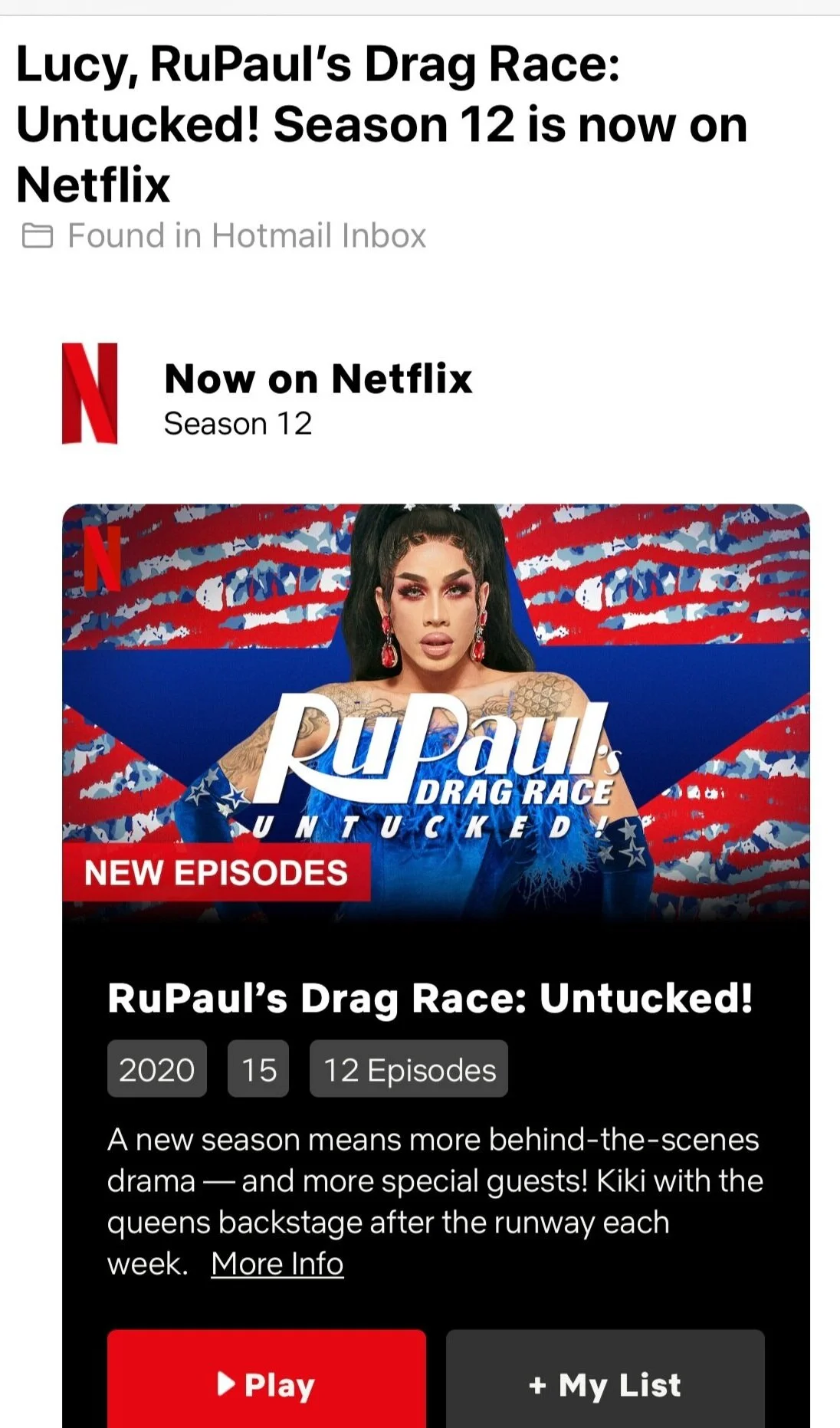
Here’s another way they pull me back.
I fully appreciate, by the way, the insights you’re getting into my viewing habits.
This one is personalised and reminds me to jump back and carry on watching JVN.
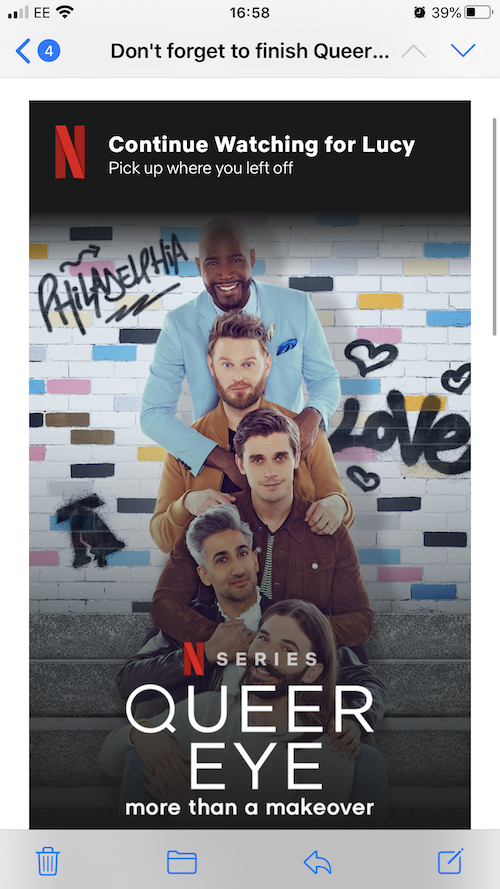
Applying this to your situation:
You want to identify different ways to get your audience back using your platform. Use email to drive behaviours that result in engagement.
But remember…
The relationship your customer has with your brand is NOT the same as the relationship YOU have with your brand. They don’t really care.
5. Asking for referrals
Word of mouth referrals are like, the best: the holy grail of recommendations. This social proof helps to acquire new users plus, their CPA is usually pretty low.
Ideas:
You could look out for active users, and ask them to share testimonials about you.
You could introduce incentives (HotJar does a great thing and incentives referrals by offering swag, as does Stryve now)
You could set up an automation that detects a high level of usage and sends a survey or poll.
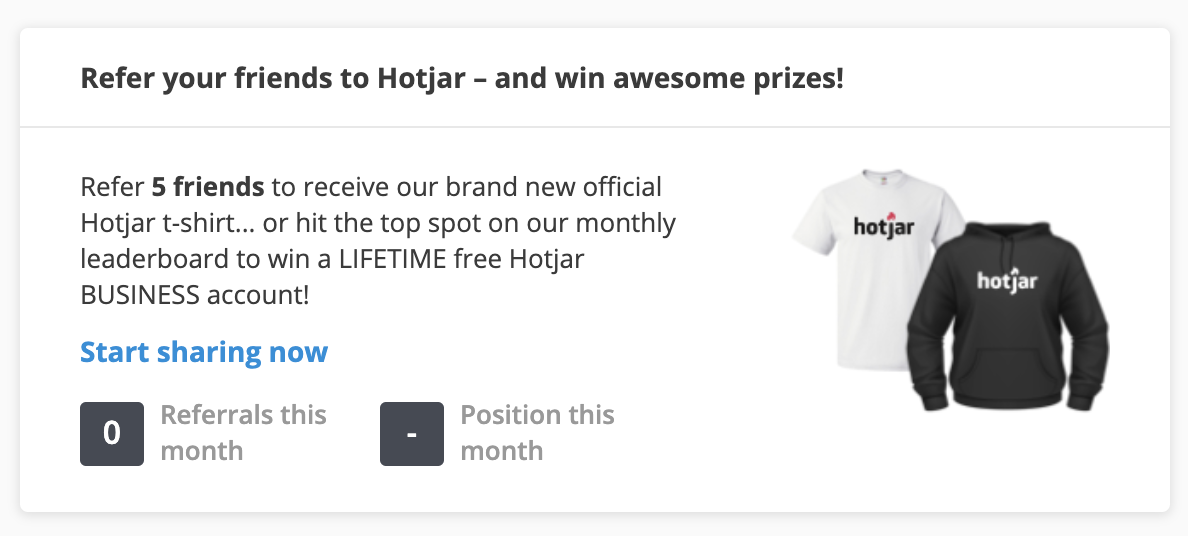
BUT be clear about what you want them to do.
Do you want them to refer you directly to a certain page on the website, ask for star reviews, or ask them to leave a few words on your Capterra page?
Specifics help.
What tools should you use?
If you’re an early stage startup you’re going to want to start simple and relatively cheap, but to make it work I would suggest you need the following features:
Ability to set up basic automations
Drag and drop editors
Ability to design for mobile
Reporting
Merge tags
A business that follows has a clear stance on GDPR.
Mailchimp, HubSpot, and dotdigital are just a few examples.
Next time, I will talk all things copy! That’s if anyone’s reading this :)
Interested to learn more? Get in touch today or connect with me on LinkedIn.